ServicesConcrete Backyards
Concrete Backyards in Rancho Santa Margarita
We turn a backyard of patchy grass, bare dirt or worn pavers into one usable concrete surface. That means correct slope away from your home, reinforcement on a compacted base and joints placed where cracks should go. Once it cures, we come back to check it with you.
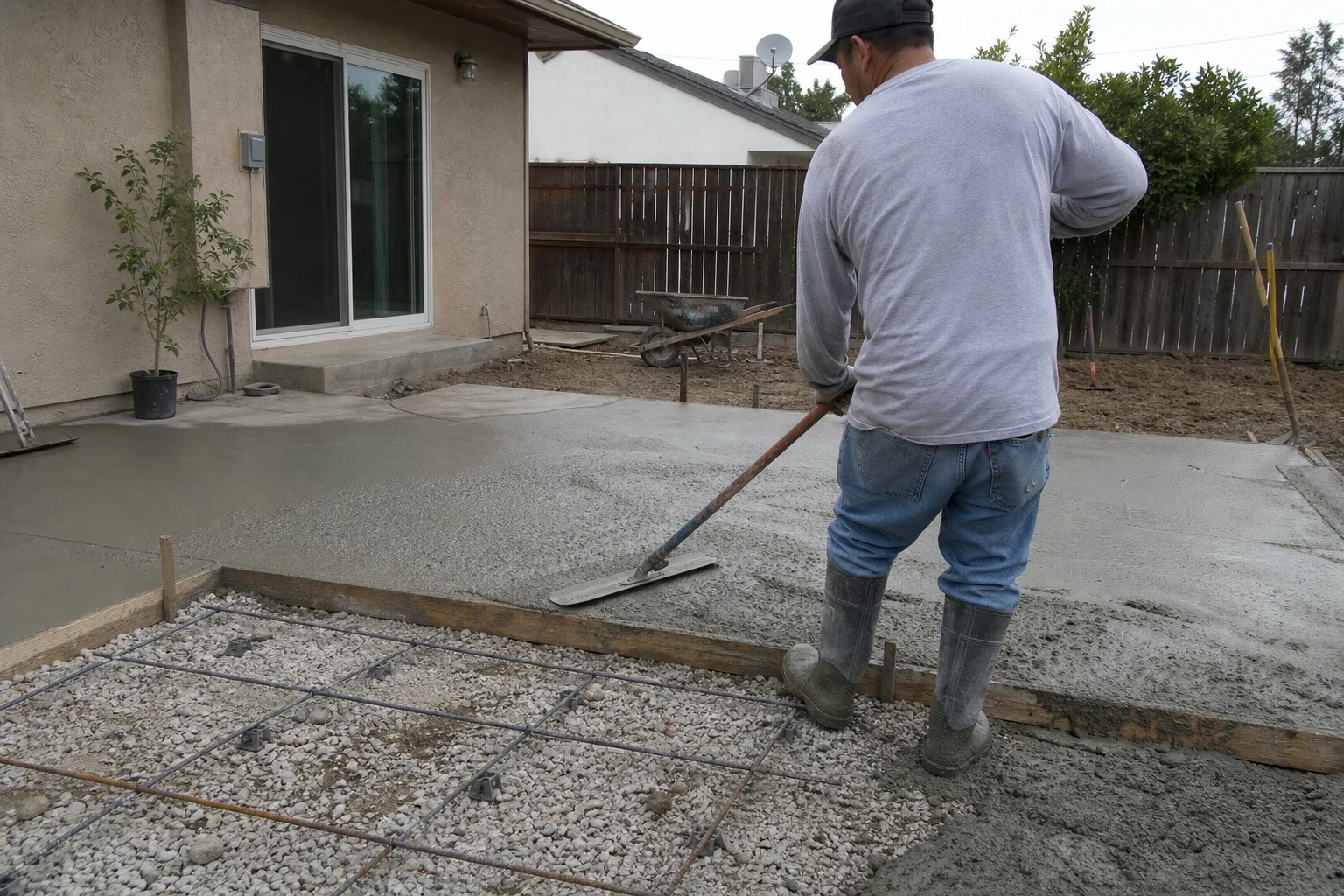
One Surface, Planned From the Soil Up
A concrete backyard covers most or all of the open yard behind your home. It is a bigger job than a single patio because the whole yard has to shed water, meet existing walls and doors at the right height, and leave room for planters, trees or a future spa. We lay it out as one system, not a set of separate slabs.
Much of south Orange County sits on clay soil that swells when wet and shrinks in summer. That movement is what cracks thin, unreinforced slabs. We plan base depth, steel and joint spacing around it, so the cracks that do form stay in the sawcut lines.
Once the slab has cured, we return to look it over with you and explain how to care for it through its first year. You get a backyard you can use, plus a clear idea of what normal looks like.
What a Backyard Pour Includes
- Excavation and grading
- We remove sod, roots and loose fill, then cut the subgrade to depth. The finished surface is set to fall away from your home, typically about a quarter inch per foot, so rain moves toward drains instead of the foundation.
- Drainage tie-in
- Large slabs move a lot of water. We set area drains or a channel drain at low points and connect them to your existing lines or a suitable outlet before any concrete goes down.
- Compacted base and steel
- Crushed aggregate base is compacted in lifts. Rebar is tied in a grid and lifted on plastic supports to mid-depth in the slab. Steel left lying on the dirt does almost nothing; held at the center, it keeps crack edges tight.
- Joint layout
- Control joints are planned before the pour and cut within the first day. On a standard 4-inch slab we keep panels roughly 8 to 10 feet across and avoid long, narrow shapes, which crack first.
- Finish of your choice
- Broom finish gives the best grip. Salt finish and exposed aggregate add texture, and if you want a patterned look we cover that on our Stamped Concrete page.
- Check-back visit and care guide
- Once curing is done, we return to inspect joints, drainage and edges with you. We also leave written care steps covering sealing, cleaning and what to keep off the surface early on.
Signs Your Backyard Is Ready for Concrete
Grass that never fills in
Shade, foot traffic and dogs wear lawn down to dirt. If you reseed every spring and still have bare patches, a hard surface ends the cycle and the water bill that comes with it.
Water pooling near the house
Puddles against the foundation or under the back door mean the yard slopes the wrong way. A new pour lets us reset the grade completely.
Pavers that have shifted
Old pavers or DIY stepping stones heave, sink and grow weeds in the gaps. We remove them and pour a continuous, reinforced slab in their place.
Dirt tracked indoors
If kids and pets bring the yard inside every day, a cleanable surface from the door outward solves it.
No level spot for furniture
Tables rock and grills tip on uneven ground. A flat slab, pitched just enough to drain, gives you a stable place to set things up.
What Moves the Price of a Concrete Backyard
Every backyard is priced from its own measurements and conditions. The biggest variables are how much concrete goes in and how hard it is to get it there. Each factor below shows up as its own line on your written estimate, so the total is never one unexplained number.
Square footage and thickness
Area drives the yardage of concrete and the amount of steel. A thicker section under a planned spa or heavy feature adds material.
Access
A narrow side yard can mean pumping concrete over the house or wheelbarrowing it in, which adds equipment or labor.
Removal and haul-off
Tearing out old pavers, slabs or deep roots adds demolition time and disposal loads.
Grading and drainage
Yards that need major soil cut, fill or new drain runs cost more than ones that are close to grade already.
Finish
Broom finish is the simplest. Exposed aggregate, color and stamping add materials and finishing time.
How the Job Runs
- 1
Walkthrough and measurements
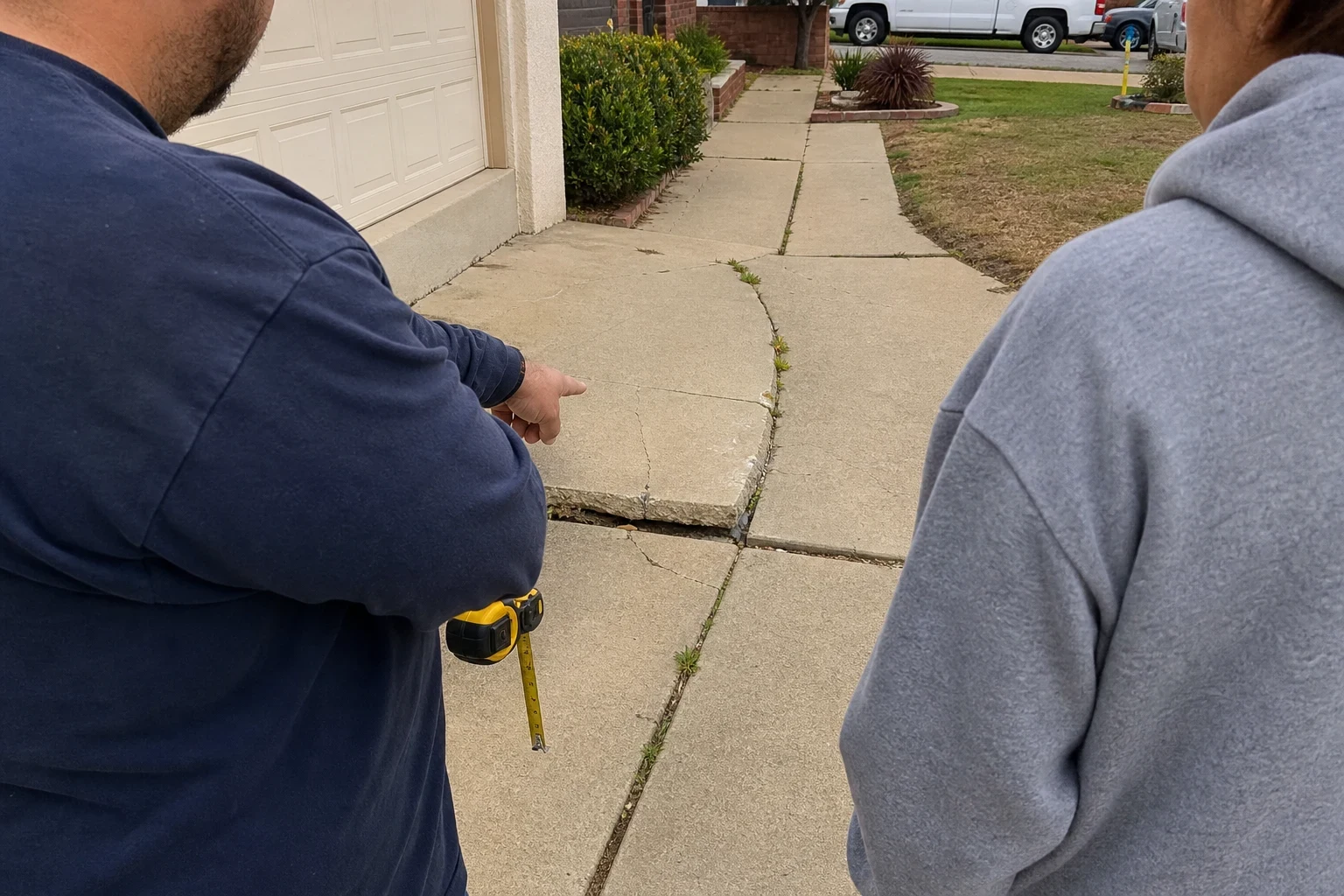
We measure the yard, shoot grades, note door thresholds and existing drains, and check side yard access for equipment. You get a written estimate broken out by line item.
- 2
Demolition and grading
Sod, old hardscape and excess soil are removed and hauled off. The subgrade is shaped and compacted, and drain lines are set.
- 3
Forms, base and steel
Forms are staked to final elevation, base is compacted, and rebar is tied and supported. We check slope with a level across the forms before ordering concrete.
- 4
Pour and finish
Concrete arrives by truck or pump, depending on access. We screed, float, edge and apply the finish, then cut control joints once the surface can hold the saw.
- 5
Cure and return visit
The slab cures for several days before light use. We return a few weeks later to review the work with you and go over care.
Concrete Backyard Questions
How soon can we use the backyard after the pour?
Foot traffic is usually fine within a day or two. Furniture and grills can go out in about a week. Concrete keeps gaining strength for roughly 28 days, so we ask you to hold off on anything very heavy until then.
Will the concrete crack?
Concrete loses volume as water leaves it, so a slab this size will crack somewhere. We decide where. Sawcut joints, steel held at the right depth and a compacted base keep those cracks in the joint lines instead of across open panels.
Do I need HOA approval?
Many neighborhoods require architectural review for hardscape changes. We can give you a drawing with dimensions, slope and finish to include with your submittal. It is best to have approval in hand before we schedule.
Can you pour around trees and planters?
Yes. We leave planter cutouts and keep the slab back from tree trunks so roots have room. Fast-growing species near the slab are worth discussing at the walkthrough, since roots can lift concrete over time.
Should the slab be sealed?
A penetrating or film-forming sealer helps resist stains from oil, sunscreen and pool chemicals. We cover timing and product type during the return visit, since sealing too early can trap moisture.
What happens at the check-back visit?
We look at joints, edges and drainage after the first rain or watering. We answer questions about any hairline cracks or surface marks and leave you with written care steps for the first year.
Start Planning Your Backyard
Give us the rough size of the yard, what covers it today and what you plan to do out there. We will book a walkthrough and stay with the job through the return visit.