ServicesConcrete Pool Decks
Concrete Pool Decks in Rancho Santa Margarita
We remove worn decks and pour new concrete around your pool, sloped so water runs away from the coping and finished so it grips wet feet without scraping them. After the pour we come back, look it over with you and explain how to care for it.
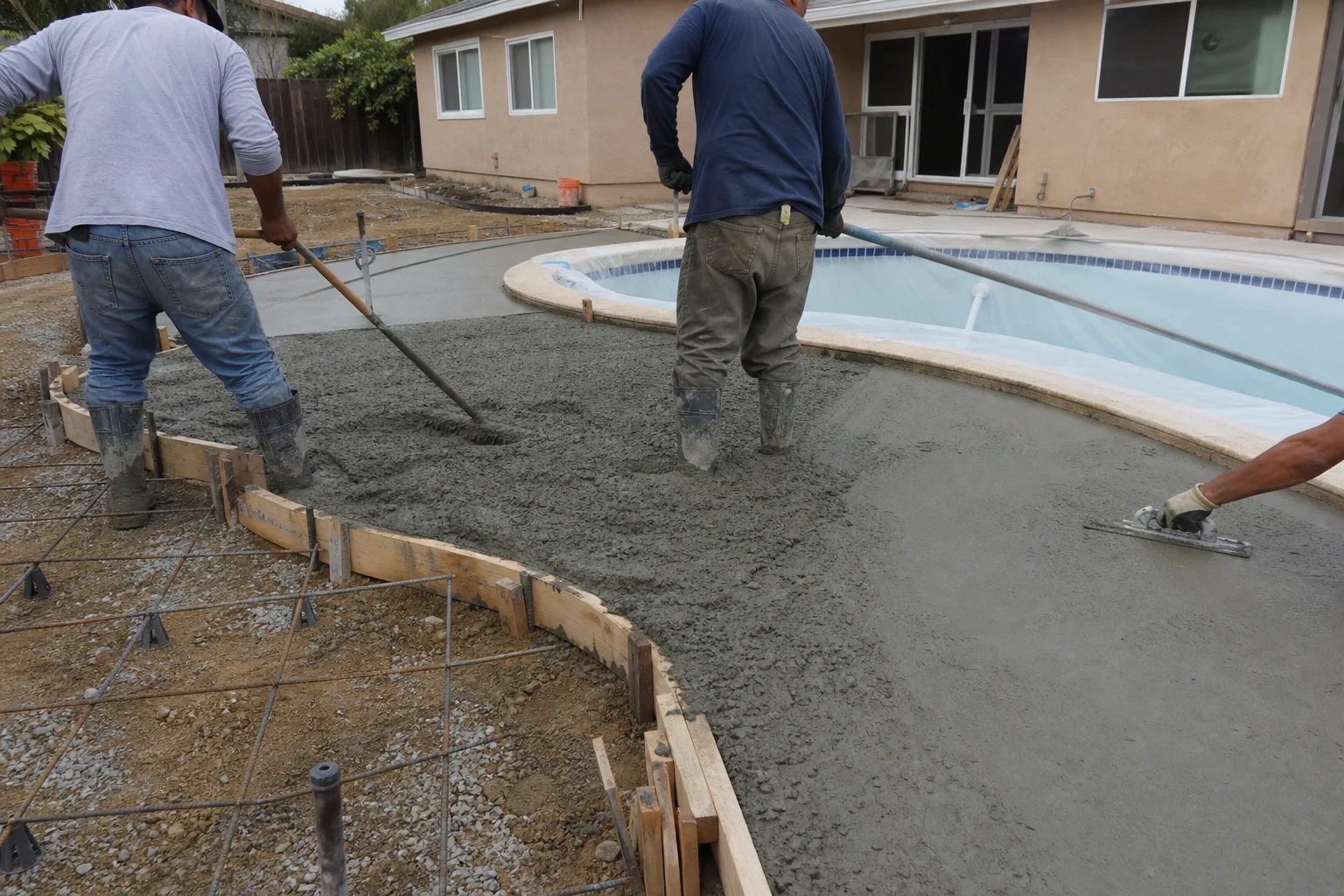
A pool deck has a harder job than a patio
A pool deck gets splashed every day, walked on barefoot and baked in afternoon sun. It also sits beside a heavy shell that moves differently than the slab around it. That combination is why pool decks crack along the coping, hold puddles or get too hot to cross when the details are skipped.
We build the deck around three things that decide how it ages. The slope carries water toward drains or landscape instead of back into the pool. The joint at the coping is left open and sealed with flexible sealant so the deck and shell can move independently. Control joints are cut where shrinkage cracks would otherwise land.
Once the concrete has cured, we check back. You get a walk-through of what to watch, when to reseal and which pool chemicals to keep off the surface.
What the work includes
Removal of the old deck
We break out and haul away the existing concrete or pavers, taking care at the coping so the pool edge is not chipped.
Compacted base and drainage slope
The subgrade is compacted and a gravel base is set, then forms are graded to roughly a quarter inch of fall per foot away from the water. Where the yard is flat, we can add deck drains or a channel drain.
Steel and bonding coordination
We place rebar to tie the slab together. Electrical code requires an equipotential bonding grid under concrete within a few feet of the pool, so we coordinate with your electrician and keep the pour on hold until that grid is inspected.
Coping expansion joint
A foam strip keeps a gap between the deck and the coping, later filled with flexible sealant. A rigid joint here is the most common reason pool decks crack in a ring around the pool.
A finish chosen for bare feet
Light broom, salt finish, stamped patterns or a textured cool coating. Each one balances traction, heat and how easily it cleans, and we explain the trade-offs before you choose. Our Stamped Concrete page covers patterned options in more detail.
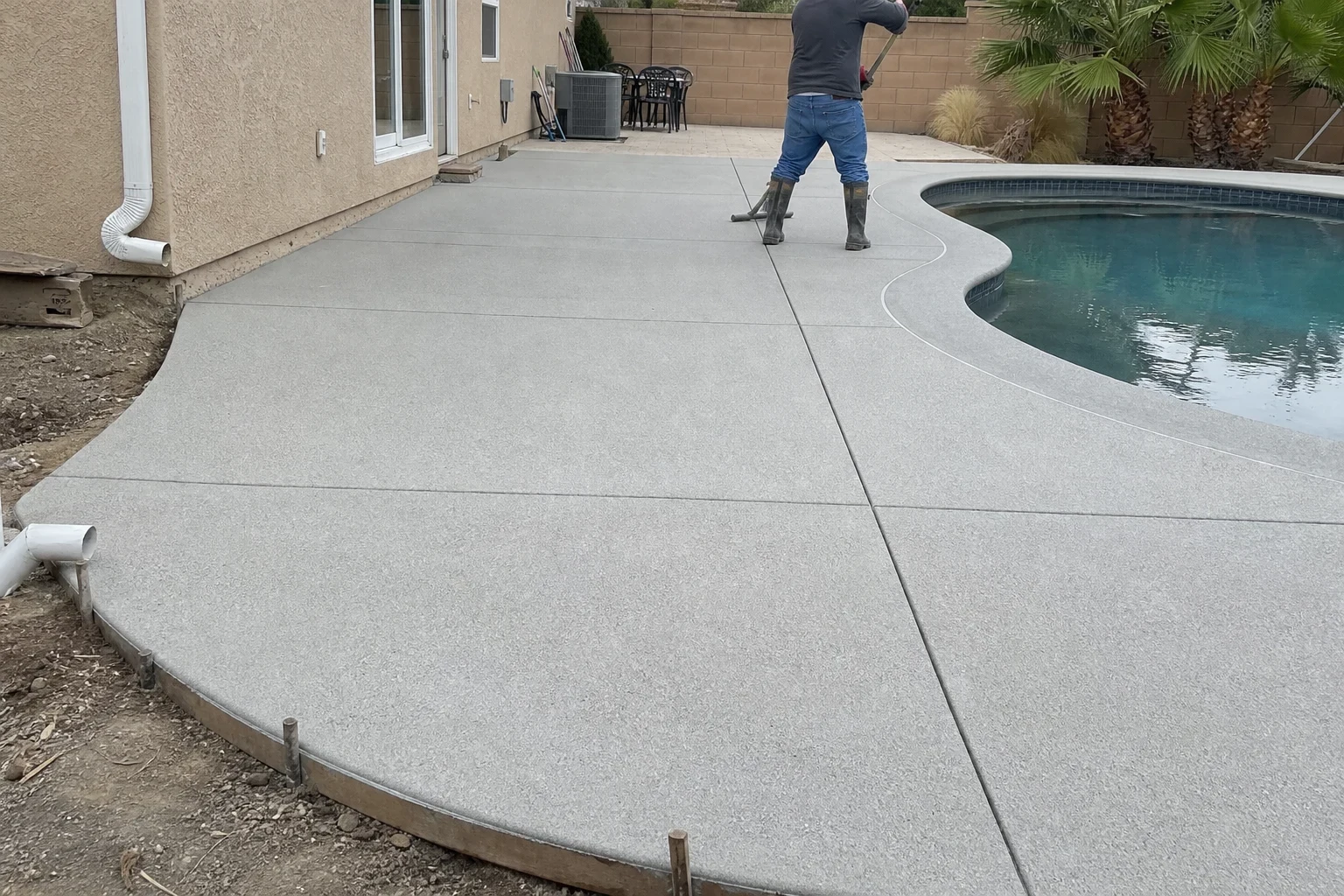
Signs it is time for a new pool deck
- Water runs toward the pool
- If rinse water or rain flows back over the coping, the slab has settled or was never sloped correctly. That water carries dirt and fertilizer into the pool and soaks the soil under the shell.
- Cracks circling the coping
- A crack running parallel to the pool edge usually means the deck was poured tight against the coping with no movement joint.
- Surface flaking and pitting
- Years of chlorine, salt water and acid washing can break down the top layer of paste, leaving exposed sand and rough patches that catch toes.
- Trip edges between slabs
- Panels that have lifted or dropped create edges that are dangerous for kids running wet. In south Orange County the clay soils swell and shrink with watering cycles, which is often the cause.
- A deck too hot to cross
- Dark or smooth concrete in full summer sun can be painful by midafternoon. A new deck lets you pick a lighter mix and a cooler texture.
How a pool deck job runs
- 1
Site visit and measurements
We measure the deck, check where water goes now, look at the coping and note how equipment will reach the backyard. You get your quote by phone or in person after that visit.
- 2
Demolition and base work
The old deck comes out, the subgrade is compacted and the gravel base is graded to the planned slope. We cover the pool or keep debris clear of it.
- 3
Forms, steel and inspection
Forms, rebar and the coping joint strip go in. The bonding grid is inspected before any concrete arrives.
- 4
Pour and finish
We place and screed the concrete, apply your finish, cut control joints at the right time and start the cure. Expect a full day on site for the pour.
- 5
Cure, sealant and follow-up
After curing, we fill the coping joint with flexible sealant. Then we come back to check the deck with you and go over cleaning, resealing and chemical handling.
What moves the price of a pool deck
Two decks of the same size can price very differently. Most of the gap comes from what has to come out, how the crew reaches the yard and the finish you pick. We break these out line by line so you can see where the money goes.
- Area and shape
- Total square footage matters, and so do curves, steps and freeform pool outlines that take more forming time.
- Demolition and access
- Removing an old slab adds labor and haul-off. When a truck chute cannot reach the backyard, concrete has to be moved by hand carts or pumped through a hose line over the house or fence, and each of those adds labor or equipment to the job.
- Finish and color
- A broom finish is the simplest. Salt finish, integral color, stamping and cool coatings each add materials and finishing time.
- Drainage work
- Deck drains, channel drains or tie-ins to an existing drain line add parts and trenching.
- Permits and bonding
- Permit fees and the electrician's bonding work are separate items that depend on your city and your pool's setup.
Pool deck questions
- How soon can we walk on the new deck and use the pool?
- Light foot traffic is usually fine after a day or two. Patio furniture and heavy planters should wait about a week, and full strength takes around 28 days. We will tell you the timing for your mix and weather when we finish.
- Which finish stays coolest in summer?
- Lighter colors and textured surfaces stay noticeably cooler than dark or smooth concrete. A salt finish or a textured cool coating is a common choice where kids are barefoot all afternoon.
- Will salt water or chlorine damage the concrete?
- Over time, yes, especially on an unsealed surface. A penetrating sealer slows that down. We explain how often to reseal and which chemicals to keep off the deck during our follow-up visit.
- Do I need a permit?
- In many cases a pool deck replacement needs a permit, partly because of the bonding requirement near the water. We look at your project and explain what your city expects before work is scheduled.
- Can you pour without replacing my coping?
- Often, yes, if the coping is solid and sitting level. We protect it during demolition and leave a proper sealed joint against it. If the coping is loose, we will tell you before the pour.
Ready for a deck that drains and stays comfortable
Tell us about your pool and the problems with the current deck. We will set up a visit, measure, and explain the slope, finish and drainage we would use.