ServicesRV Parking Pads
Concrete RV Parking Pads in Rancho Santa Margarita
We build RV pads that carry the weight of a motorhome, fifth wheel or boat trailer without cracking or settling. That means a thicker slab, real steel and a compacted base. Once it cures, we come back to show you how to care for it.
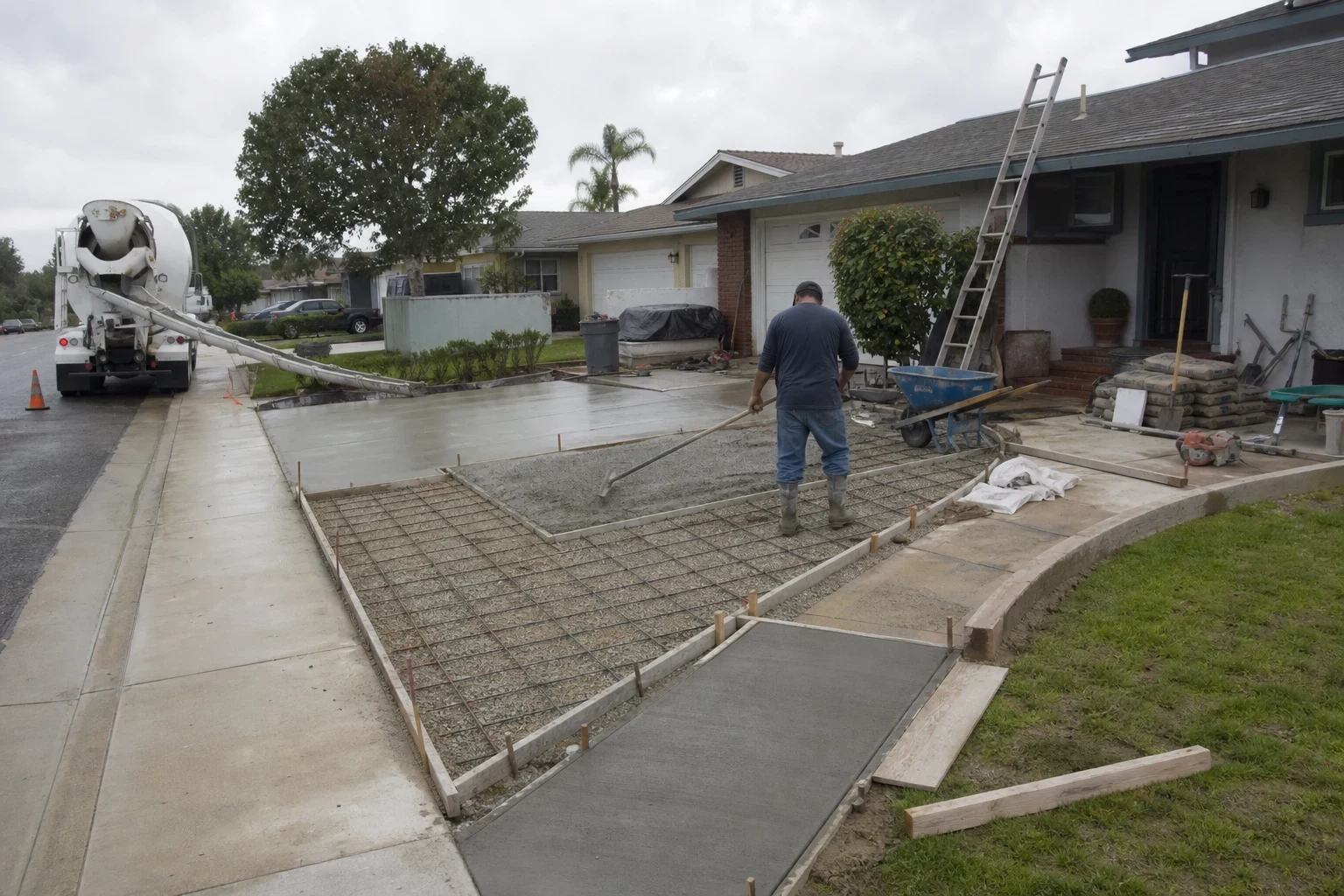
A slab sized for the weight it carries
A standard 4-inch patio slab is not built for a 20,000-pound Class A coach. Concentrated loads from tires, tongue jacks and leveling jacks press into small areas, and a thin slab over loose soil cracks at those points first. We pour RV pads at 5 to 6 inches with rebar set at mid-depth and a compacted aggregate base, which spreads the load down into the ground instead of into one corner of the concrete.
An RV pad is the right call when your rig is parked on gravel that ruts, on lawn that turns soft in the rain, or on an existing driveway that was never designed for it. Clay soils are common across south Orange County, and they swell when wet and shrink when dry, so base prep matters more here than the finish.
Once the slab has cured, we check back and walk you through when it is ready for the first full load and how to keep it in good shape.
What goes into the pad
- Excavation and subgrade
- We dig out topsoil and organic material, which compress over time. The native soil below is graded and compacted so the slab sits on something stable.
- Compacted aggregate base
- We place 4 to 6 inches of crushed rock base and compact it in lifts with a plate compactor. This layer drains water away from the slab and gives the concrete an even bearing surface.
- Rebar grid held at mid-depth
- Steel is tied into a grid and propped on small supports so it sits near the center of the concrete once it is placed. That position is where steel resists bending. Bars left lying on the dirt add almost nothing.
- Thicker slab and stronger mix
- We pour a higher-strength mix at a thickness matched to your rig's weight. Edges where tires roll on can be thickened further.
- Slope and control joints
- The pad is pitched slightly so rain and wash water run off rather than pooling under the coach. Control joints are saw cut at planned spacing so shrinkage cracks form in the joints, not across the slab.
- Broom finish
- A broom finish gives tires and shoes grip when the surface is wet. It also hides tire marks better than a smooth trowel finish.
Signs it is time for a proper RV pad
Ruts in gravel or dirt
Tires sink and push gravel aside, leaving the rig sitting out of level and making it harder to pull out.
Cracks in your current driveway
If cracks run out from where the RV's tires or jacks sit, the slab is too thin for the load.
Water pooling under the coach
Standing water under an RV speeds up rust on the frame and invites mold in storage compartments.
Leveling jacks sinking
Jack pads that press into soft ground mean you are releveling every time the weather changes.
A new rig or a bigger one
Moving up from a travel trailer to a fifth wheel or motorhome adds a lot of weight. Plan the pad around the heaviest vehicle you expect to own.
How an RV pad job runs
- 1
Site visit and measurements
We look at the access path, the soil, drainage and the size and weight of your rig. We also ask about gate width and turning room, since a pad is only useful if you can back onto it.
- 2
Written estimate and approvals
You get a line-item estimate covering excavation, base, steel, concrete and finish. If your HOA needs plans, or a curb cut needs a city permit, we explain what is involved before work starts.
- 3
Prep day
We excavate, compact the subgrade, place and compact the base, set forms to grade and tie the rebar. Protecting your landscaping and nearby hardscape is part of the setup.
- 4
Pour and finish
Concrete is placed, screeded, floated and broom finished. Control joints are cut once the slab can take the saw without raveling, then we clean up and leave the pad to cure.
- 5
Follow-up after the cure
We check back on the slab and give you care steps: when to drive on it, when it can hold the full coach and what to do about sealing and stains.
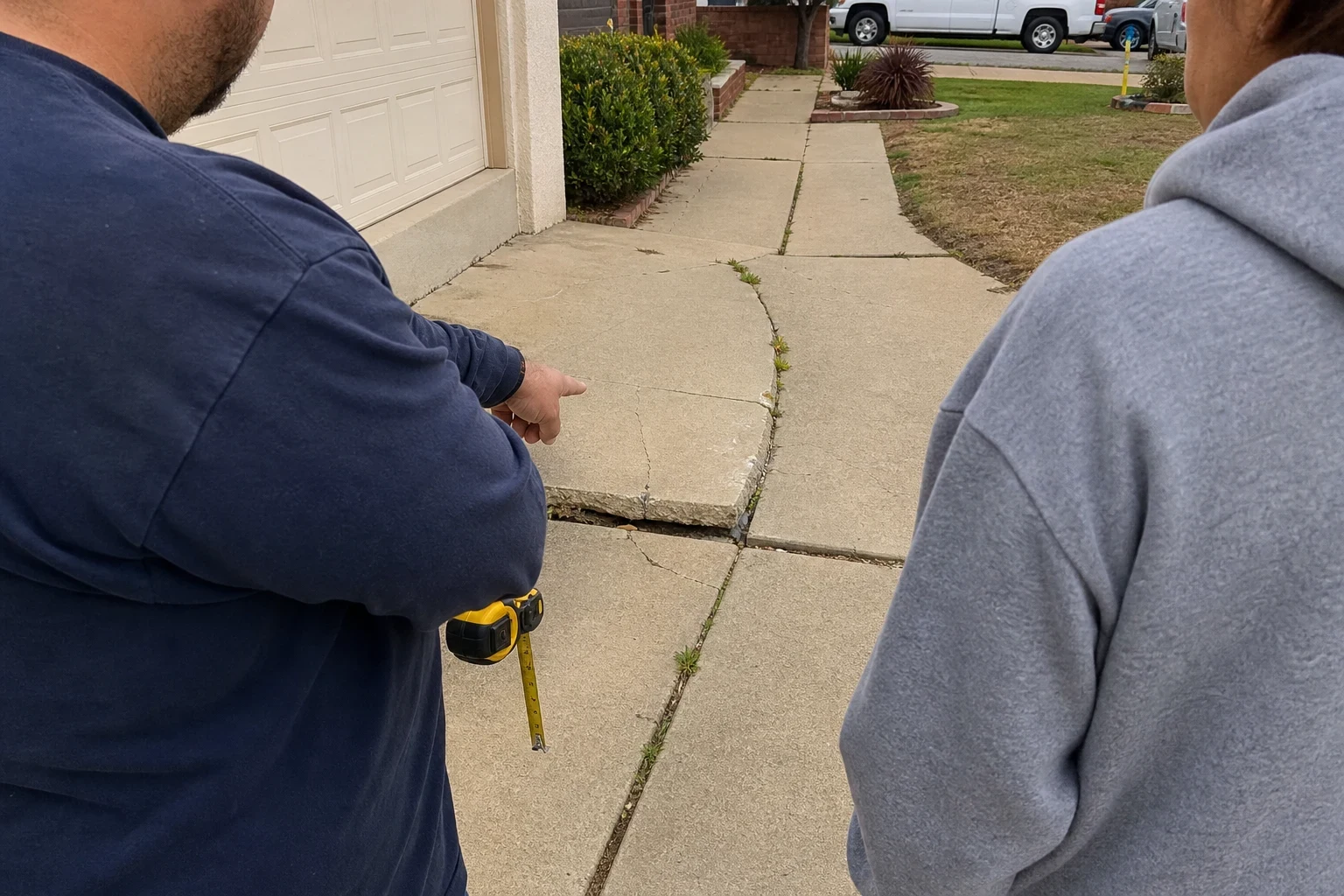
What moves the price of an RV pad
Every pad is priced from its own measurements and site conditions. The biggest drivers are the slab's size and thickness and how much digging and base it needs. We list each item on the estimate so you can see where the cost comes from.
- Size and thickness
- Length, width and depth set the cubic yards of concrete. A pad for a 40-foot motorhome uses far more material than one for a utility trailer.
- Access to the site
- If a concrete truck can reach the forms, the pour goes faster. Tight side yards or steep grades may mean a pump or wheelbarrows, which adds labor.
- Soil and grading
- Expansive clay, slopes or old fill can require deeper excavation, more base or a retaining edge.
- Removal of what is there
- Breaking out an old slab, pavers or heavy roots and hauling them away adds time and disposal cost.
- Permits and HOA requirements
- Curb cuts, approach widening or HOA design rules can add permit fees and paperwork.
RV pad questions
Something not covered here? (949) 990-5653
How thick should an RV pad be?
Most pads we build are 5 to 6 inches thick with rebar. Heavier motorhomes or areas under leveling jacks may call for more. We size it to your rig's weight, not a generic number.
How soon can I park my RV on the new pad?
Foot traffic is usually fine within a day or two, and a car in about a week. For a full-weight motorhome or fifth wheel, we recommend waiting about 28 days, when the concrete reaches its design strength. We confirm timing during our follow-up visit.
Can you extend my existing driveway for RV parking?
Often, yes. We tie the new pad to the old slab with dowels or separate them with an isolation joint so the two can move independently. We also check whether the existing driveway can handle the RV rolling across it.
Should I seal the pad?
A penetrating sealer helps resist oil, coolant and black streak stains from tires. We explain when to apply it after the cure and how often to reapply.
Will the pad crack?
Concrete shrinks as it cures, and some hairline cracking is normal. Control joints, rebar and a compacted base keep cracks in the joints and stop them from opening or shifting.
Do I need a permit for an RV pad?
It depends on the work. A pad on your own lot often does not, but a new curb cut or driveway approach usually needs a city permit, and many HOAs require approval. We go over what applies to your home on the site visit.
Give your RV a level place to park
Share your rig's length and weight and where you would like it parked. We will schedule a site visit, take measurements and put together a written estimate, then follow up once the slab has cured.