ServicesDriveways
Concrete Driveways in Rancho Santa Margarita
We remove the old driveway, rebuild the base beneath it and pour new concrete with reinforcement and properly spaced control joints. After the pour, we explain how to cure and care for the slab, then come back to check on it.
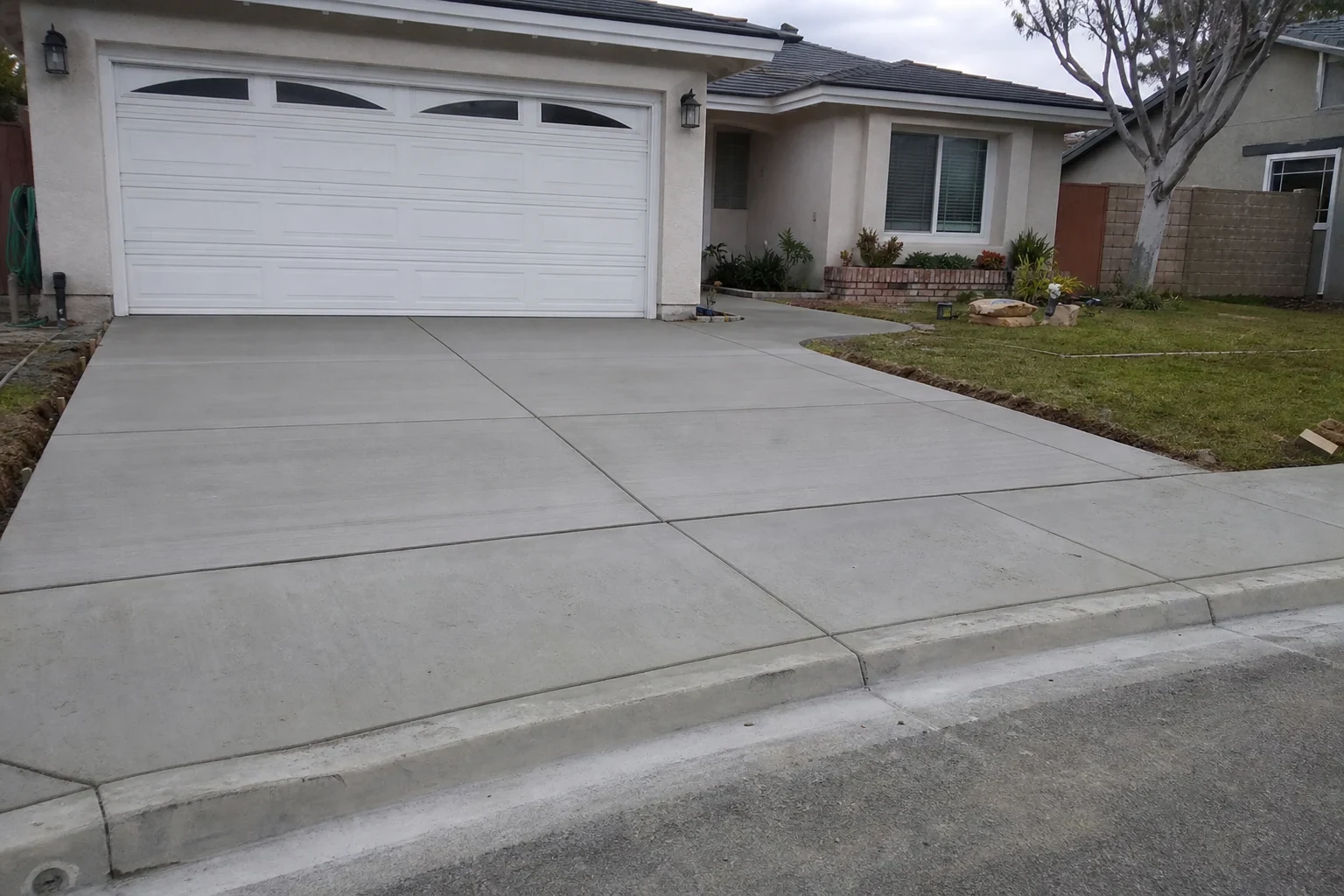
A driveway is only as good as what's under it
Most driveway failures start below the surface. Clay soil that swells when wet and shrinks when dry, a thin or poorly compacted base, or missing steel lets the slab move. Once it moves, it cracks along lines nobody planned.
Our driveway work treats the base and the joints as seriously as the finish. We excavate to firm subgrade, add and compact crushed aggregate, set rebar on chairs so it sits mid-slab, and cut control joints where the concrete wants to crack anyway. South Orange County has expansive clay in many yards, and building for that movement is what keeps a new driveway flat for years.
When the forms come off, we stay involved. We walk you through the first weeks of curing, tell you when it's safe to park, and check back to see how the slab is settling in.
What a driveway replacement includes
- Demolition and haul-off
- We break out the existing concrete or asphalt, load it out and haul it away. The old apron comes out too if it's part of the job.
- Subgrade and base prep
- We dig to stable soil, remove soft or organic material, and place crushed aggregate base. It's compacted in lifts with a plate compactor so the slab has even support from edge to edge.
- Forms, slope and drainage
- Forms are set so water runs away from your garage and toward the street or a drain. A consistent fall keeps water from pooling at the door or soaking the base.
- Steel reinforcement
- We lay a rebar grid tied at the intersections and raised on chairs. Steel lying on the dirt does almost nothing, so we make sure it sits in the middle of the concrete.
- Pour, finish and joints
- Concrete is placed, screeded and finished with a broom texture for traction. Control joints are tooled or saw-cut at planned spacing so shrinkage cracks follow straight lines. If you want a decorative surface, our stamped concrete page covers those options.
- Curing guidance and a follow-up
- You get clear instructions on watering, keeping traffic off and when to drive on it. We check back after the job to look at the slab with you and answer questions.
Signs your driveway is ready to be replaced
Cracks with a lip
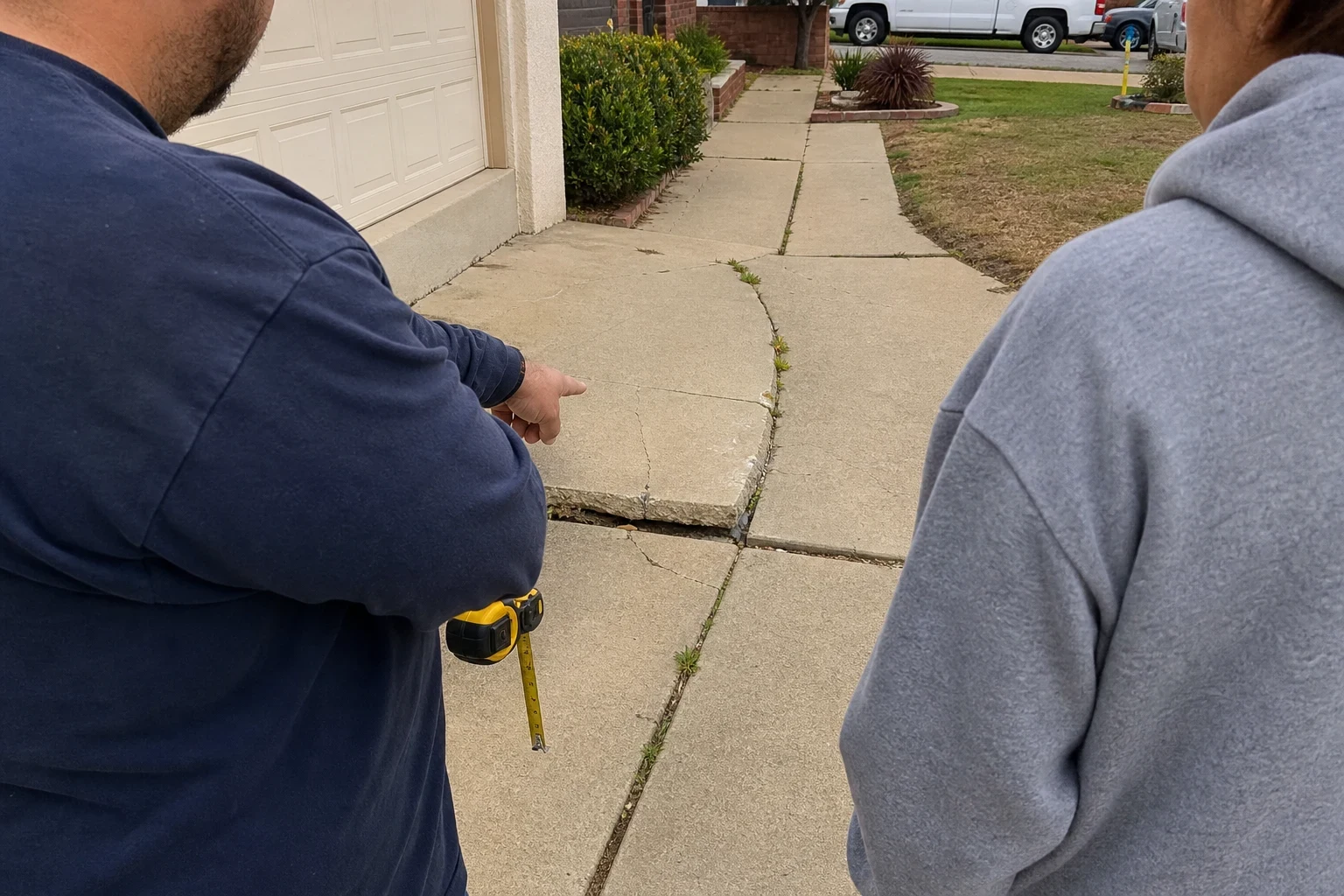
Fine surface cracks are mostly a cosmetic issue. When the two edges of a crack no longer line up and one panel stands proud of its neighbor, the base underneath has moved. That ledge catches toes and tires, and it usually grows.
Sections that heave or sink
Tree roots lift panels, and washed-out base lets them drop. Either way, the slab is no longer supported evenly.
Water pooling after rain
Puddles that sit near the garage or along an edge point to lost slope. Standing water keeps working into joints and softening the base.
A flaking, pitted surface
Spalling and exposed stone usually trace back to a weak mix or poor finishing. Once the top layer goes, it keeps wearing away.
It no longer fits how you use it
You need room for another car, a wider approach or a better turn into the garage. Replacing is the time to change the layout.
How a driveway job runs
- 1
Site visit and measurements
We measure the area, check the slope, look at drainage and access, and talk about finish and layout. You get a written scope so you know exactly what's included.
- 2
Tear-out and excavation
Demo usually takes a day. We excavate to the right depth for base plus slab and protect nearby planters, walls and your garage door threshold.
- 3
Base, forms and steel
We compact the base, set forms to grade and place the rebar. Any required inspection happens at this stage, before concrete arrives.
- 4
Pour and finish
The truck delivers the mix and our crew places, levels and finishes it in one push. On hot or windy days we time the pour and use curing methods that slow moisture loss, since fast drying weakens the surface.
- 5
Cure, walk-through and check-back
We review care steps with you on site, then follow up after the slab has had time to cure. If something looks off to you, that's the time to raise it.
What moves the price of a driveway
Every driveway is priced from its own measurements and conditions, so we don't quote a number before seeing it. The biggest swings come from how much has to come out, what's underneath and the finish you choose. Your written estimate lists each part separately.
- Square footage and thickness
- More area means more concrete, steel and labor. A thicker slab for heavier vehicles adds material as well.
- Demolition and disposal
- Thick old concrete, heavy reinforcement or multiple layers take longer to break out and cost more to haul.
- Soil and base condition
- Soft, wet or clay-heavy subgrade may need deeper excavation and extra base rock to give the slab firm support.
- Access and grade
- A steep driveway or tight access can mean pumping concrete instead of chuting it from the truck, plus more forming work.
- Finish and permits
- A broom finish is the most direct option; stamped or colored surfaces add materials and labor. Work on the apron at the street may need a city permit.
Driveway questions we hear often
Something not covered here? (949) 990-5653
How soon can I drive on my new driveway?
Foot traffic is usually fine after a day or two. We generally ask you to keep cars off for about a week, and longer for heavy trucks. Concrete keeps gaining strength for roughly four weeks, so avoid parking large vehicles near the edges during that time.
Will the new driveway crack?
As water leaves the mix, the slab pulls in slightly, and that movement has to go somewhere. We cut control joints so the stress releases along straight, planned lines rather than across the middle of a panel. The compacted base and steel set mid-slab hold neighboring panels at the same height, so a hairline in a joint stays a hairline.
How thick should the slab be?
For ordinary cars, four inches over a compacted base is common. If you park a heavy truck or a trailer, we usually recommend a thicker slab. For motorhomes, our concrete RV parking pads page explains the heavier build.
Should I seal it, and how do I care for it?
A penetrating sealer helps resist oil stains and water absorption, and we'll tell you when the slab is ready for it. Clean oil drips promptly, avoid de-icing salts, and keep sprinklers from soaking the same edge daily. We cover all of this at the walk-through and again when we check back.
Does my HOA need to approve the work?
Many communities in the area require architectural approval for driveway changes, especially color or stamped finishes. We can give you the measurements and material details your HOA asks for. It's best to get approval before we schedule the pour.
Ready to replace a tired driveway?
Tell us about the size, the slope and what's wrong with the current slab. We'll set up a site visit and explain what the job involves before any work begins.