ServicesConcrete Side Yards
Concrete Side Yards in Rancho Santa Margarita
We pour side yard concrete that pitches water away from your foundation, sits below the stucco weep screed and gives you a clean, firm path for bins, hoses and equipment. Once the slab cures, we check back and show you how to care for it.
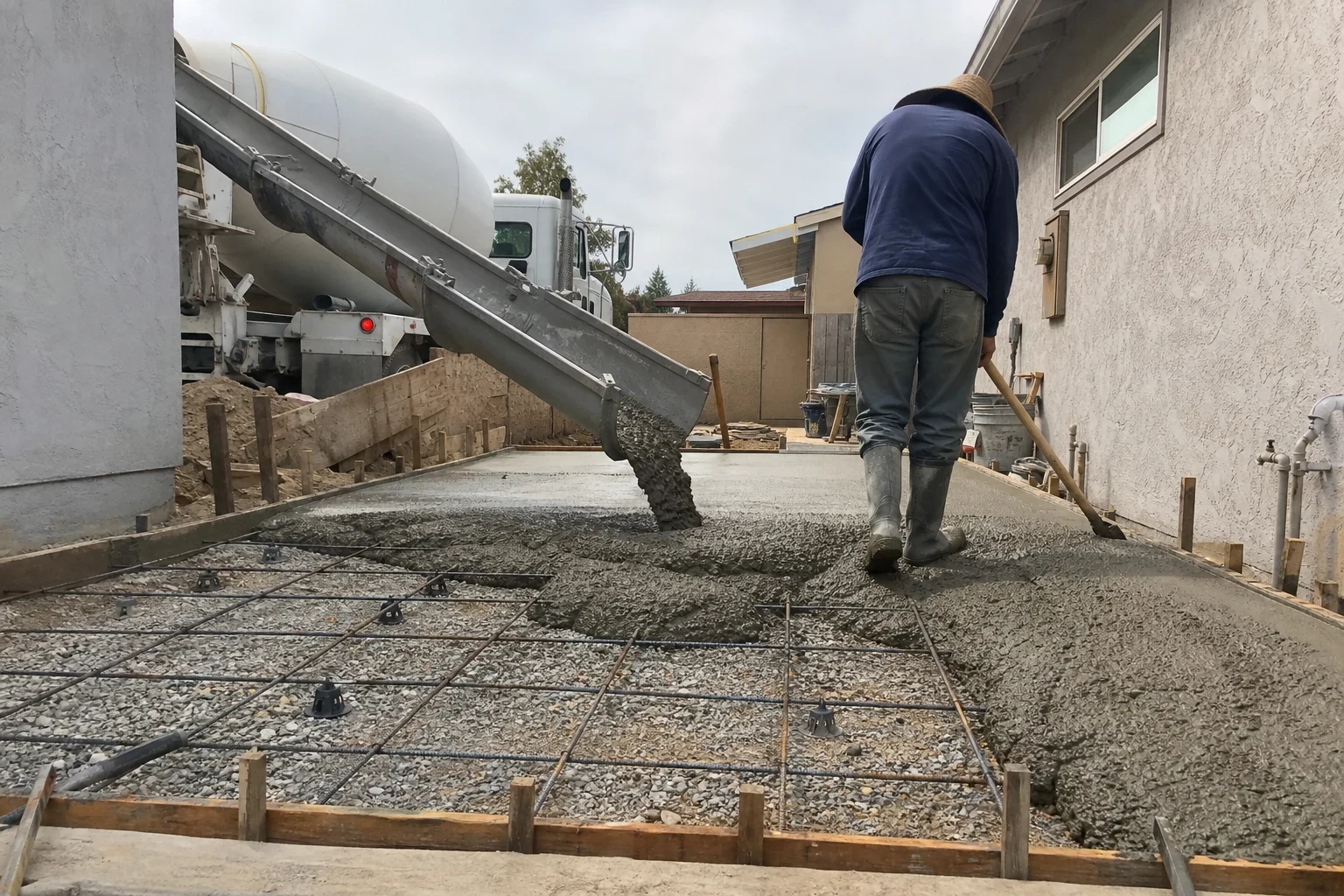
Why a Side Yard Slab Is Mostly About Water
A side yard is usually a strip four to eight feet wide between your home and the fence. Every roof and downspout on that side drains into it. Bare dirt or loose gravel there turns to mud, holds moisture against the foundation and washes out under the fence. A properly graded slab sends that water to the street or to an area drain instead.
The slope does the real work. We set the concrete to fall away from the house, typically about a quarter inch per foot, and keep the finished surface low enough to leave clearance under the weep screed at the bottom of the stucco. Pour too high and water wicks into the wall. Pour too flat and it ponds against the foundation.
Our job does not end when the forms come off. We come back once the concrete has cured, look at the joints and drainage with you, and explain what the slab needs over the next few months.
What Goes Into a Side Yard Pour
Excavation and grading
We dig out the old soil, gravel or pavers to the right depth and shape the subgrade to the fall we want in the finished slab. Getting the grade right in the dirt means the concrete is a uniform thickness.
Compacted base
A layer of crushed aggregate base is compacted under the slab. Many soils in south Orange County hold clay that swells when wet, and a firm base reduces movement under the concrete.
Drains and downspout tie-ins
Where water has nowhere to go, we set area drains and run downspouts into solid pipe before the pour. Doing it now avoids cutting into new concrete later.
Reinforcement and isolation joints
Rebar or wire mesh is set on supports so it sits in the middle of the slab, not on the dirt. Expansion material goes against the foundation and around the AC pad so the slab can move without pushing on your home.
Control joints at the right spacing
Long, narrow slabs crack across their width, so we cut or tool joints at regular intervals to tell those cracks where to form. On a typical side yard that means a joint every five to eight feet.
Broom finish
A light broom texture gives traction on a shaded strip that stays damp. Stamped concrete is an option if the side yard is visible from the street or a patio.
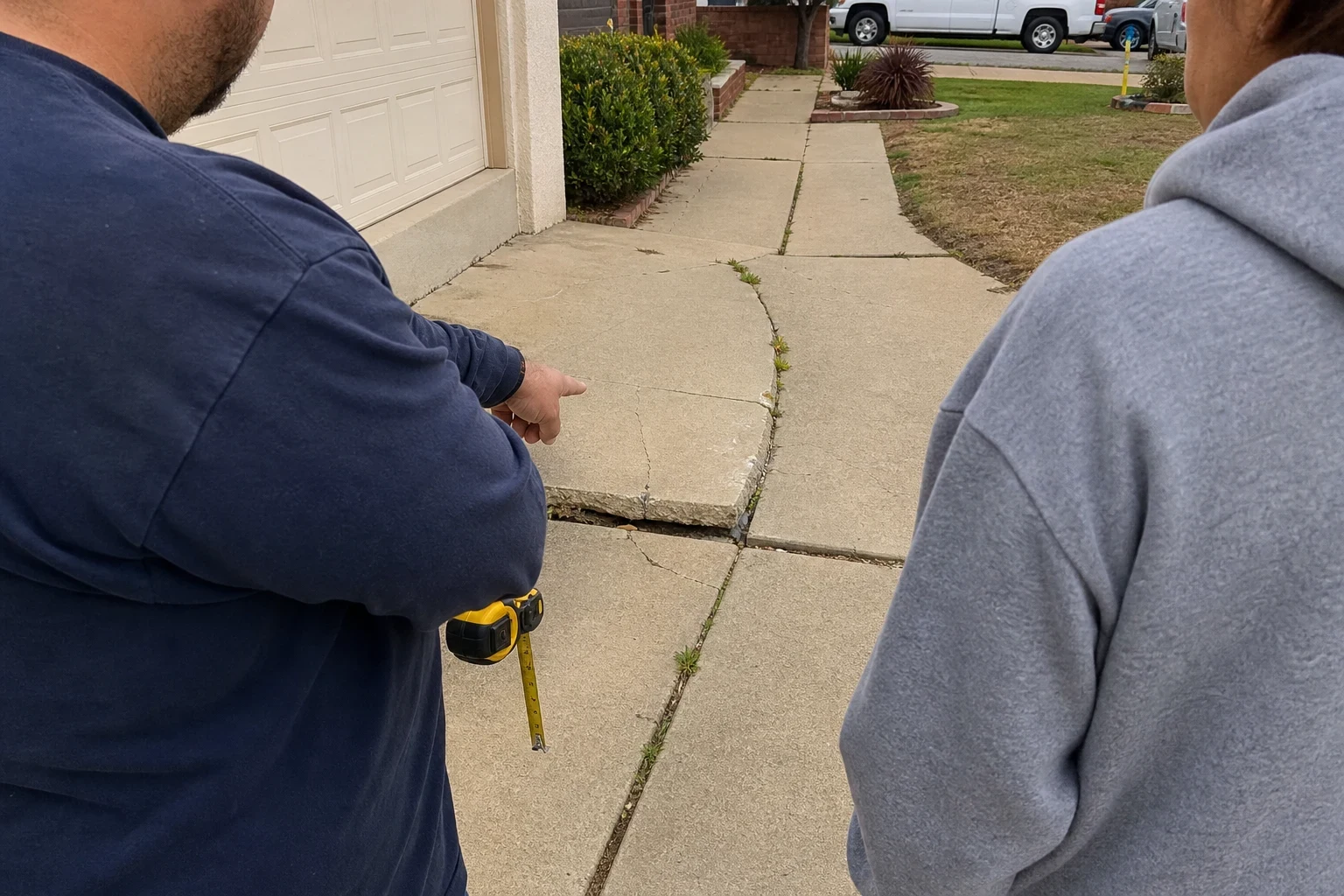
Signs Your Side Yard Needs Concrete
- Standing water following rain
- Puddles along the wall a day past a storm mean water is sitting against your foundation and soaking the soil beneath it.
- Mud tracked through the gate
- If rolling trash bins or a mower down the side of your home leaves ruts, the surface cannot carry the traffic it gets.
- Soil piled up on the stucco
- Dirt or mulch above the weep screed traps moisture in the wall and invites termites. Lowering the grade and pouring a slab fixes the height for good.
- Gravel washing out
- Rock that migrates toward the fence or into the yard drains leaves low spots and clogs the drains it lands in.
- Weeds you fight every season
- A shaded, damp strip grows weeds faster than you can pull them. Concrete ends that chore.
How a Side Yard Job Runs
- 1
Site visit and layout
We measure the run, check where water enters and exits, and note gas meters, hose bibs, cleanouts and the AC condenser. You get a written estimate that lists the base, reinforcement, drains and finish.
- 2
Utility marking and demolition
DigAlert marks buried lines before we dig. Then we remove the old surface and haul it away, keeping the work zone to the side yard.
- 3
Forms, base and steel
We set forms to string lines for the slope, compact the base and place reinforcement and isolation material. You can see the fall before any concrete arrives.
- 4
The pour
Most side yards are too narrow for a truck, so concrete comes in by line pump or wheelbarrow through the gate. We place, screed, float, cut joints and broom the surface the same day, then lay out boards to protect landscaping.
- 5
Cure and follow-up visit
We tell you when the slab can take foot traffic and when it can take bins and equipment. Once it has cured, we come back to check the joints and drainage and go over care with you.
What Sets the Price of a Side Yard
Side yards are small by square footage, but access and drainage drive much of the labor. We price each one in person, and the written estimate shows each part so nothing appears later.
- Length and width
- Square footage sets the concrete volume, base and steel. A long, narrow run also needs more forming and more control joints per square foot than a wide patio.
- How concrete gets in
- A narrow gate or a long carry from the street can mean a line pump instead of wheelbarrows. The pump adds cost but shortens the pour and keeps the mix consistent.
- Drainage work
- Area drains, solid pipe and downspout connections add material and trenching. Skipping them where water collects usually costs more in the long run.
- What comes out first
- Removing old concrete, pavers or deep gravel takes more labor and hauling than clearing bare soil. Lowering soil that sits too high on the wall adds excavation too.
- Finish choice
- A broom finish is the simplest. Color, stamped patterns or a border tied to an adjoining patio or walkway add steps on pour day.
Side Yard Concrete Questions
- What happens to the AC condenser and gas meter in my side yard?
- Both stay where they are, and we build the forms to work around them. A foam isolation strip separates the new slab from the condenser pad and the meter riser, so each one can shift without dragging the other. The gas utility requires open clearance around the meter, and we keep that area free of concrete. A cracked or sunken condenser pad can be replaced in the same pour if you want it done.
- How high can the slab come up on my wall?
- The finished concrete has to stay below the weep screed at the base of your stucco, with clearance so water can drain out of the wall. If your existing soil is higher than that, we dig it down before the pour. This is one of the most common problems we see in older side yards.
- When can I use it again?
- You can usually walk on it the next day. Rolling bins and wheelbarrows should wait about a week, and anything heavy waits longer while the concrete gains strength. We give you the exact timing for your slab before we leave.
- Will the slab crack?
- Concrete shrinks as it cures, so small cracks are normal. Control joints are there so those cracks form in straight lines inside the joint instead of wandering across the surface. On our follow-up visit we check how the joints are doing with you.
- Should I seal it?
- A penetrating sealer helps a shaded side yard resist staining and moss. We recommend waiting until the concrete has cured, roughly a month, and we explain which products suit a broom finish. Keeping drains clear and downspouts connected matters more than sealer.
- Do you also pour the walkway to the front?
- Yes. Many side yards connect to a walkway or a backyard patio, and pouring them together keeps the slopes and finishes matched. Our walkways and sidewalks and concrete backyards pages cover that work.
Get the Water Moving Away From Your Home
Tell us how long the side yard is, what is on it now and where the water goes when it rains. We will set up a visit, give you a written estimate and come back to look at the finished slab with you.