ServicesPatios
Concrete Patios in Rancho Santa Margarita
We pour concrete patios that drain away from your home, crack where we plan them to and hold up to years of furniture and foot traffic. Once the slab cures, we come back to check it and walk you through how to care for it.
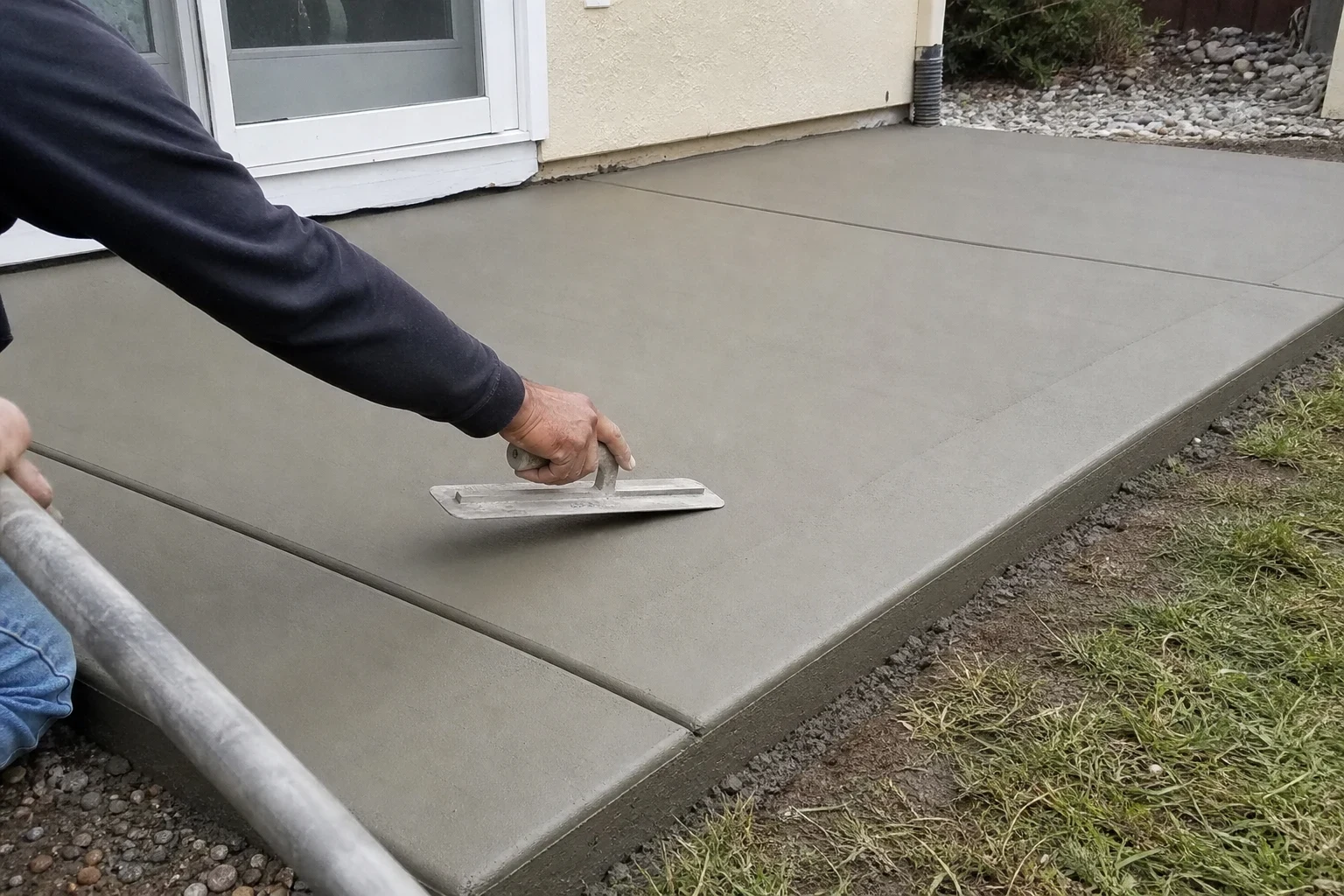
A patio slab that sheds water and stays flat
A patio is a thin slab, usually 4 inches thick, sitting directly on soil. Its life depends on what is underneath it and how water leaves it. We excavate to firm ground, place and compact a crushed aggregate base, and set forms so the finished surface falls about 1/4 inch per foot away from your home. That slope keeps rain and hose water off the foundation and out from under door thresholds.
The clay soils common across south Orange County swell when wet and shrink as they dry. A well-compacted base and the right reinforcement keep that movement from turning into uneven slabs and wide cracks.
Our job does not end when the forms come off. We check back once the concrete has cured, look over the joints and surface with you, and explain what to do and avoid during the first year.
What goes into every patio we pour
Layout and grade check
We mark the patio footprint, shoot grades and confirm where water will go. Door thresholds, weep screeds and nearby planters all affect the finished height, so we measure them before any digging starts.
Excavation and compacted base
We remove sod, roots and loose soil, then place a crushed aggregate base and compact it in lifts with a plate compactor. Loose fill under a slab is a leading cause of settling and cracking.
Reinforcement
We set rebar on chairs or use welded wire mesh, sized to the slab and soil. Rebar left lying in the dirt does nothing, so we keep it positioned in the middle of the slab.
Pour and finish
We place the concrete, screed it flat to the forms and finish it the way you choose: broom finish for traction, smooth trowel, or exposed aggregate. Decorative patterns are covered on our Stamped Concrete page.
Control joints
Concrete shrinks as it cures and will crack somewhere. We cut or tool control joints at spacing matched to the slab thickness so those cracks form in straight lines inside the joints.
Cleanup and care instructions
We haul off the spoils and forms, wash down the work area and leave you with written care notes for the curing period.
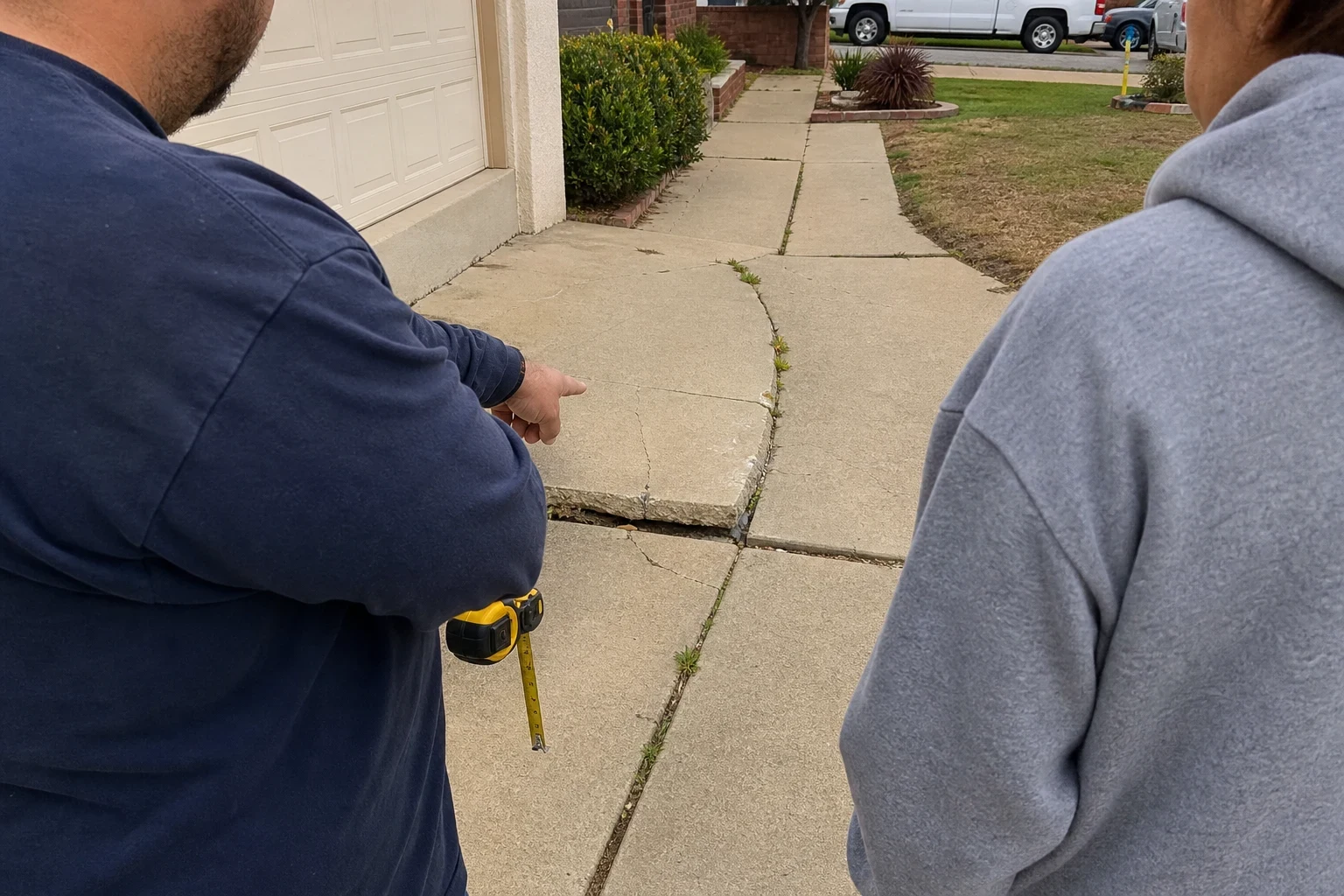
When an old patio has reached its limit
- Rainwater collects against the wall
- Puddles that sit along the stucco or drain toward the slider after a storm point to a slab with reversed slope or one that has sunk. Every rain sends that water to your foundation.
- Panels have lifted or sunk
- When one section rises or drops at a joint, the usual causes are swelling clay, tree roots or base rock that was never compacted. Those raised lips catch toes and chair legs.
- Cracks grow wider each year
- Hairline shrinkage cracks show up in every slab and are no cause for worry. Openings that widen season after season, branch in several directions or break a panel into loose pieces mean the support below has failed.
- The top layer is scaling or dusting
- Flaking patches and gritty sand on the surface usually trace back to overworked finishing or a slab that lost moisture too quickly while curing. A coat of sealer will not bring that surface back.
- The yard is still bare ground or loose pavers
- Dirt, pavers that rock underfoot and stepping stones settling into the lawn are all good reasons for a solid slab, sized to fit your table, grill and chairs.
How a patio job runs
- 1
Phone call and site visit
We talk through the size, finish and how you plan to use the space, then look at the yard in person. You get a written estimate that lists the excavation, base, reinforcement, finish and haul-off as separate lines.
- 2
Prep day
The crew excavates, places and compacts the base, sets forms and places reinforcement. If your city requires a permit or inspection for the work, we schedule it before the pour.
- 3
Pour day
The truck arrives, and we place, screed and finish the slab, then cut control joints. In hot, dry weather we time the pour for cooler hours and apply a curing compound so the surface does not dry ahead of the core.
- 4
Curing and cleanup
Forms come off within a day or two. We clean up, haul away debris and go over the care sheet with you: light foot traffic the next day, furniture in about a week, nothing heavy for roughly 28 days.
- 5
Follow-up visit
Once the slab has cured, we come back to look at the joints, the surface and the drainage with you, and answer questions about sealing and everyday care.
What sets the price of a patio
Patio pricing comes down to how much concrete goes in, how much work it takes to prepare the ground, and the finish you choose. We price each line in writing so you can see where the money goes and adjust the scope if you need to.
- Size and thickness
- Square footage and slab depth set the cubic yards of concrete, the volume of base rock and the labor to place both.
- Removal and excavation
- Breaking out an old slab or pavers and hauling the debris adds labor and disposal. Sloped yards may need more digging or a thickened edge.
- Access
- A wide gate lets us pump or chute concrete close to the forms. A narrow side yard can mean wheelbarrows or a line pump, which takes more time.
- Finish
- A broom finish is the simplest. Exposed aggregate, colored concrete and decorative borders take more material and finishing time.
- Soil and drainage needs
- Expansive clay may call for a deeper base or heavier reinforcement, and some yards need a drain line to carry water away from the slab.
Patio questions we hear often
- Will my new patio crack?
- All concrete shrinks as it cures, and some cracking is normal. Control joints give those cracks a planned place to form, so they run straight inside the joint instead of across the slab. A compacted base and proper reinforcement keep cracks tight and the panels level.
- How soon can we use the patio?
- You can walk on it the following day and set out patio furniture in about a week. Hold off on hot tubs, planters full of wet soil or other heavy loads for roughly 28 days, when the concrete reaches its design strength.
- Should the patio be sealed?
- A penetrating or acrylic sealer helps resist stains from grease, leaves and pool chemicals. We usually suggest waiting about a month so moisture can leave the slab first. At the follow-up visit we explain which sealer fits your finish and how often to reapply it.
- Can you pour the patio right up to my house?
- Yes, with an isolation joint where the slab meets the foundation so the two can move independently. We also keep the finished surface below the weep screed and door thresholds so water cannot run into the wall.
- How should I clean the new patio?
- For the first month, rinse it with a hose and a soft broom. From then on, mild soap and water handles most dirt. Avoid deicing salts and strong acids, and keep pressure washers at a moderate setting so the finish is not etched.
Plan your patio with us
Tell us about the space, how you want to use it and the finish you have in mind. We will set up a visit, give you a written estimate and check back after the pour.