ServicesStamped Concrete
Stamped Concrete in Rancho Santa Margarita
We pour colored concrete and press texture into it while it is still plastic, so your patio, walkway or driveway reads like slate, flagstone or plank. Once it cures and is sealed, we come back to look it over and walk you through care.
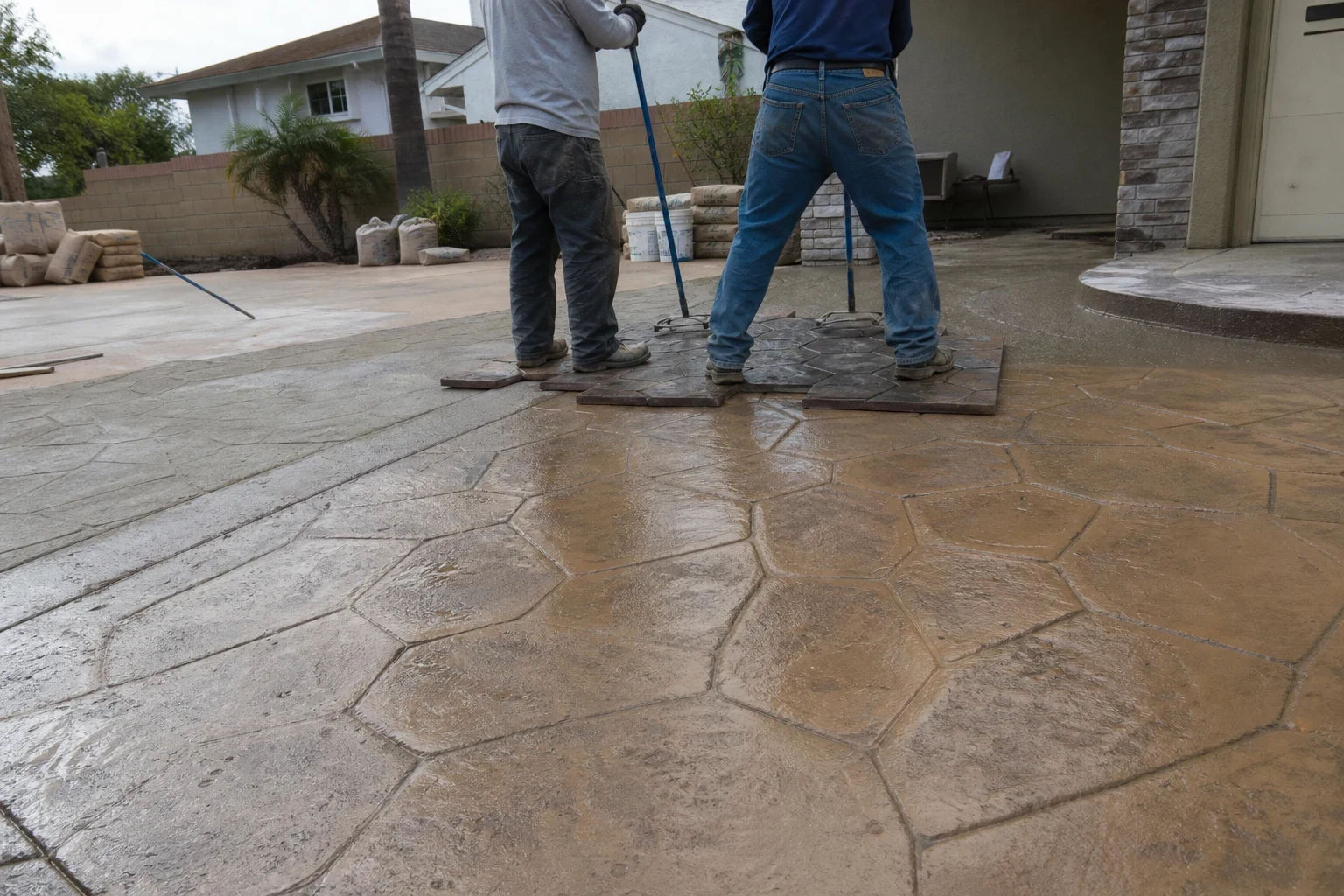
What stamped concrete is, and when it fits
Stamped concrete is a standard structural slab with two extra layers of work. Color goes in, either mixed into the whole load (integral color) or broadcast on top as a dry color hardener. Then, during a short window while the surface is firm but still workable, we lay polyurethane stamp mats across it and tamp the pattern in. A release agent keeps the mats from sticking and leaves darker tones in the low spots, which is what gives the finish depth.
It is the right call when you want the look of stone or pavers with a single continuous surface. There are no joints for weeds to push through and no individual units to settle out of line. It suits patios, pool surrounds, entries and courtyards around your home. It is less suited to a surface you want to stay perfectly smooth for rolling carts, since deep textures catch wheels.
What the work includes
- Excavation and compacted base
- We dig to depth, then place and compact crushed aggregate base. Most stamped failures start underneath, so this is not the place to save time.
- Forms and reinforcement
- Forms are set to a slope that sheds water away from your home. We add rebar or wire mesh, sized to the slab's use, chaired so it sits in the middle of the concrete instead of on the dirt.
- Color system
- We use integral color, a surface hardener, or both. Hardener gives a denser, more vivid top layer. Integral color means a chip or scrape shows the same tone underneath.
- Stamping and texturing
- Pattern mats cover the field, and flexible texturing skins handle edges and corners where a rigid mat will not reach. A border band in a contrasting pattern or color is an option.
- Control joints
- Concrete shrinks as it cures and will crack somewhere. We cut joints on a planned grid, often along grout lines in the pattern, so cracking happens where it hides.
- Sealer and follow-up
- Once the slab has cured and the release powder is washed off, we apply a sealer that locks in color and resists stains. We then check back to look at the finished surface and explain how to clean and reseal it.
Signs stamped concrete makes sense for you
A plain gray slab that looks unfinished
Broom-finished concrete is durable but flat looking. If the patio or entry is the first thing guests see, a stamped and colored surface changes the whole approach to your home.
Pavers that keep shifting
Individual pavers can settle, rock and sprout weeds in the sand joints. A continuous stamped slab gives a similar look without units moving out of plane.
An old slab past its useful life
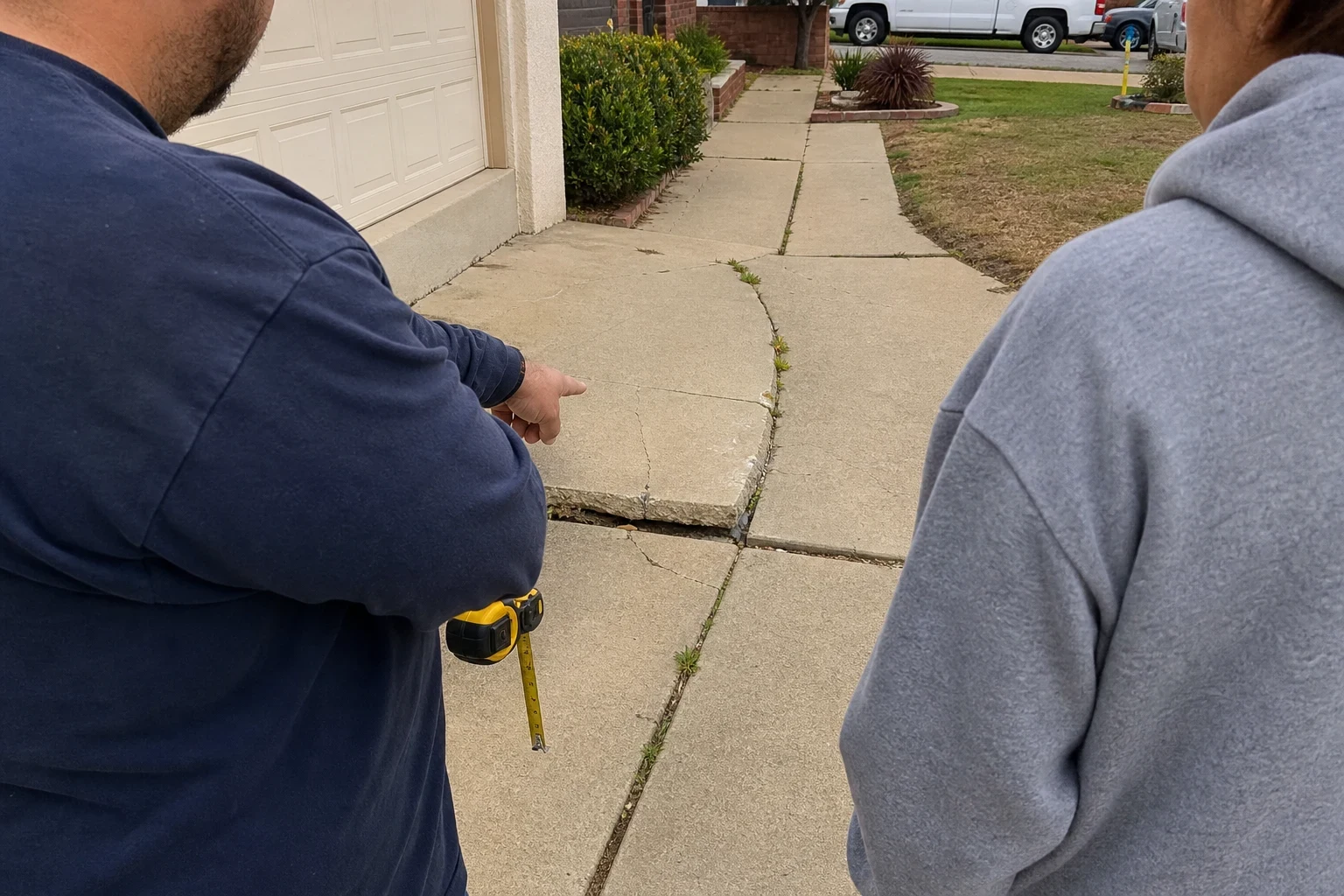
Heaved, broken or badly sunken concrete is better torn out than covered. We remove it and pour new stamped concrete on a fresh base.
Matching a new pool deck or backyard plan
If you are planning concrete pool decks or concrete backyards, stamping lets you tie the surfaces together with one pattern and color family.
Stone looks without stone costs
Natural flagstone and slate are labor heavy to set. Stamped concrete reproduces their texture in one pour.
What moves the price of stamped concrete
Stamped work costs more than a broom finish because it adds materials, crew size and a tight timing window on pour day. Your price depends mostly on the factors below. We explain each line when we give you your quote by phone and on site.
Size and shape
Larger areas spread setup cost out. Curves, steps and many corners take more hand texturing with skins.
Pattern and color layers
A single color with a simple pattern is the most efficient. Borders, two-tone release, and hand-applied stains add labor.
Demolition and base
Removing an old slab and hauling it away adds time and disposal cost. Expansive clay soil may call for a deeper base.
Access
If a truck cannot reach the pour, we pump or wheel the concrete in, which affects crew and equipment.
Sealer choice
Solvent-based acrylics deepen color more; water-based sealers have less odor. The product and number of coats affect the price.
How a stamped job runs
- 1
Design and layout by phone and on site
We talk through pattern, base color and accent color, then mark the layout, slopes and joint locations at your home. You see color samples before anything is ordered.
- 2
Prep day
Old concrete or soil comes out, the base is compacted, and forms and steel go in. We protect walls, plants and nearby surfaces from splatter.
- 3
Pour and stamp day
The concrete is placed, screeded and floated, color hardener is worked in if used, and release agent goes down. We stamp in sequence as the surface reaches the right stiffness. In summer heat this window shortens, so we start early and bring enough crew to keep ahead of the set.
- 4
Curing, joints and wash
Joints are saw cut within the first day. Several days into curing, we pressure wash the excess release agent off, leaving the antiqued tone in the texture.
- 5
Sealing and our check-back
We seal once the slab is dry enough to accept it. Later we return to look for any sealer haze, color issues or early cracking, and we explain your cleaning and resealing schedule.
Stamped concrete questions
Will stamped concrete crack?
All concrete shrinks and can crack. We reduce that with a compacted base, reinforcement and control joints placed along the pattern so most cracking follows the joints. Hairline cracks elsewhere are possible and usually cosmetic.
How often does it need resealing?
Plan on resealing every two to three years, sooner on surfaces with full western sun or heavy foot traffic. Faded color or water that soaks in instead of beading are the cues. We cover this when we check back on the job.
Is it slippery around a pool?
Smooth sealed concrete can be slick when wet. For pool decks we choose more textured patterns and can mix an anti-slip additive into the sealer. Both make wet footing noticeably better.
How soon can we use it?
Foot traffic is usually fine within a day or two. Patio furniture can go back in about a week. Vehicles on a stamped driveway should wait longer, and we give you a date based on the weather during curing.
Can you stamp over my existing patio?
Stamping is done in fresh concrete, so it cannot be pressed into an old slab. We remove the existing surface and pour new. That also lets us fix slope and base problems at the same time.
Planning a stamped surface?
Tell us the area, the look you want and what is there now. We will explain the color and pattern options, what affects your price, and how we follow up once the pour is done.