ServicesGarage Floors
Concrete Garage Floors in Rancho Santa Margarita
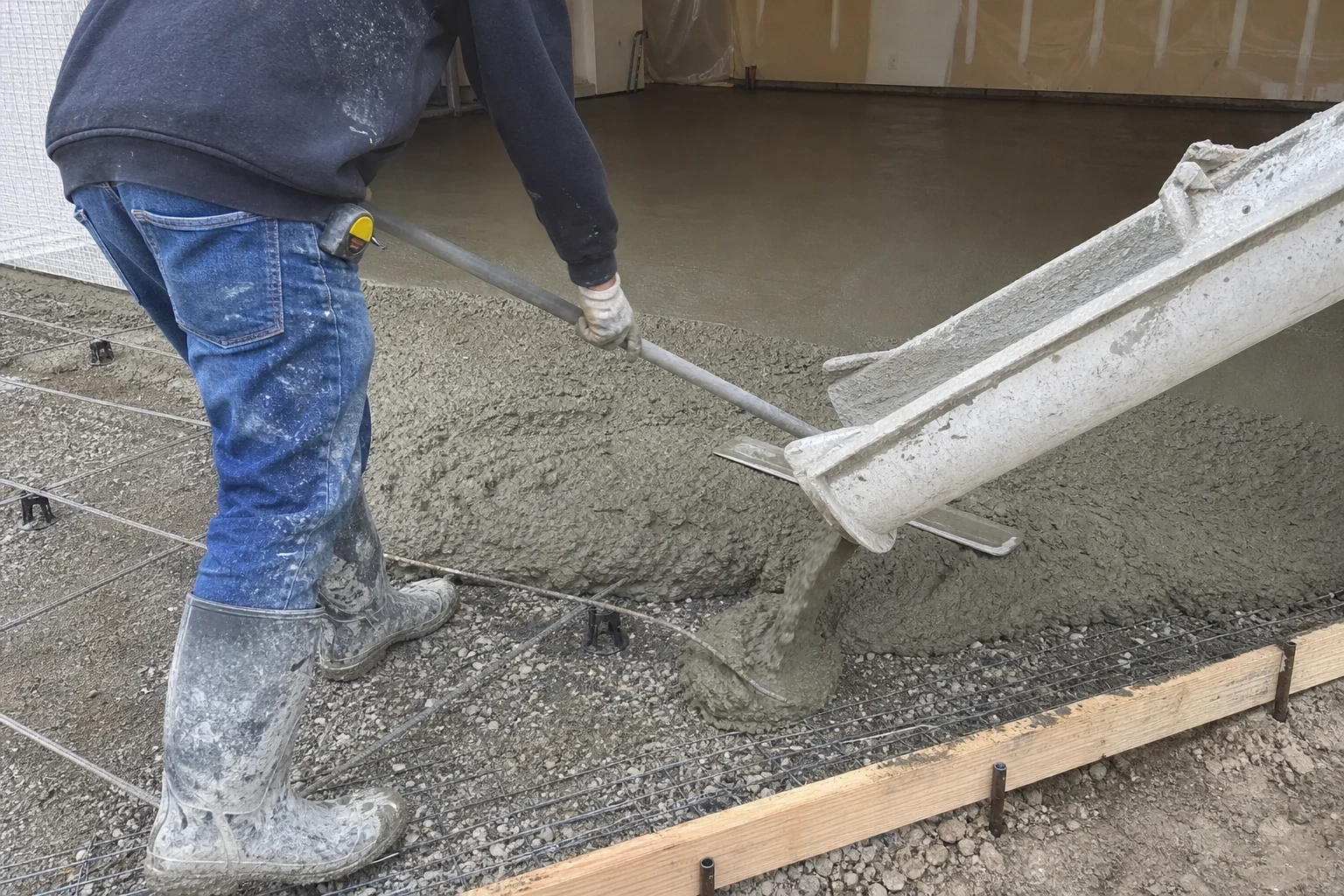
We remove worn garage slabs and pour new ones over a compacted base, with reinforcement, planned control joints and a slight fall toward the door. After the floor cures, we check back and walk you through sealing and everyday care.
A garage slab carries more than it looks like
A car sitting on a garage floor puts most of its weight on four small tire patches, and it does that every day. Add hot tires, dripping coolant, a floor jack and the occasional dropped tool, and a thin or poorly supported slab starts to crack, settle or shed its surface.
A new garage floor is the right call when the old one has sunk, heaved or broken into pieces that move. We take the existing slab out, correct what was wrong underneath, and pour a floor sized for vehicle loads. Many homes in south Orange County sit on clay soils that swell when wet and shrink when dry, so most of the work happens before any concrete arrives.
Once the pour is done, we come back after the cure to look at the joints and surface with you and explain what to put on the floor, and what to keep off it, during the first months.
What a new garage floor includes
Tear-out and haul-off
We sawcut the old slab at clean lines, break it out and haul the debris away. Cutting at the garage door threshold keeps the edge of your driveway intact.
Subgrade and base prep
We grade the soil, add crushed aggregate base and compact it in lifts. A firm, even base is what keeps a slab from settling under the weight of a parked car.
Vapor retarder and reinforcement
A plastic vapor retarder under the slab slows ground moisture that can lift coatings later. Rebar on chairs or welded wire mesh holds cracks tight if the slab moves.
Slope and control joints
We set the forms so the floor falls gently toward the door, which lets rainwater and car drips run out instead of pooling. Control joints are sawcut within hours of the pour so shrinkage cracks form in straight, planned lines.
Finish and cure
A steel-trowel finish gives a smooth, easy-to-sweep surface. We keep the slab moist or apply a curing compound so the top layer gains strength instead of drying out too fast.
Signs your garage floor needs replacing
- Sections that rock or sink
- If a piece of slab tips when you step on it, the base under it has washed out or compressed. The floor will keep moving until that base is rebuilt.
- Water pools near the back wall
- A floor that slopes the wrong way sends water toward the house, cabinets and wall plates. Correcting the slope means a new pour.
- Wide or offset cracks
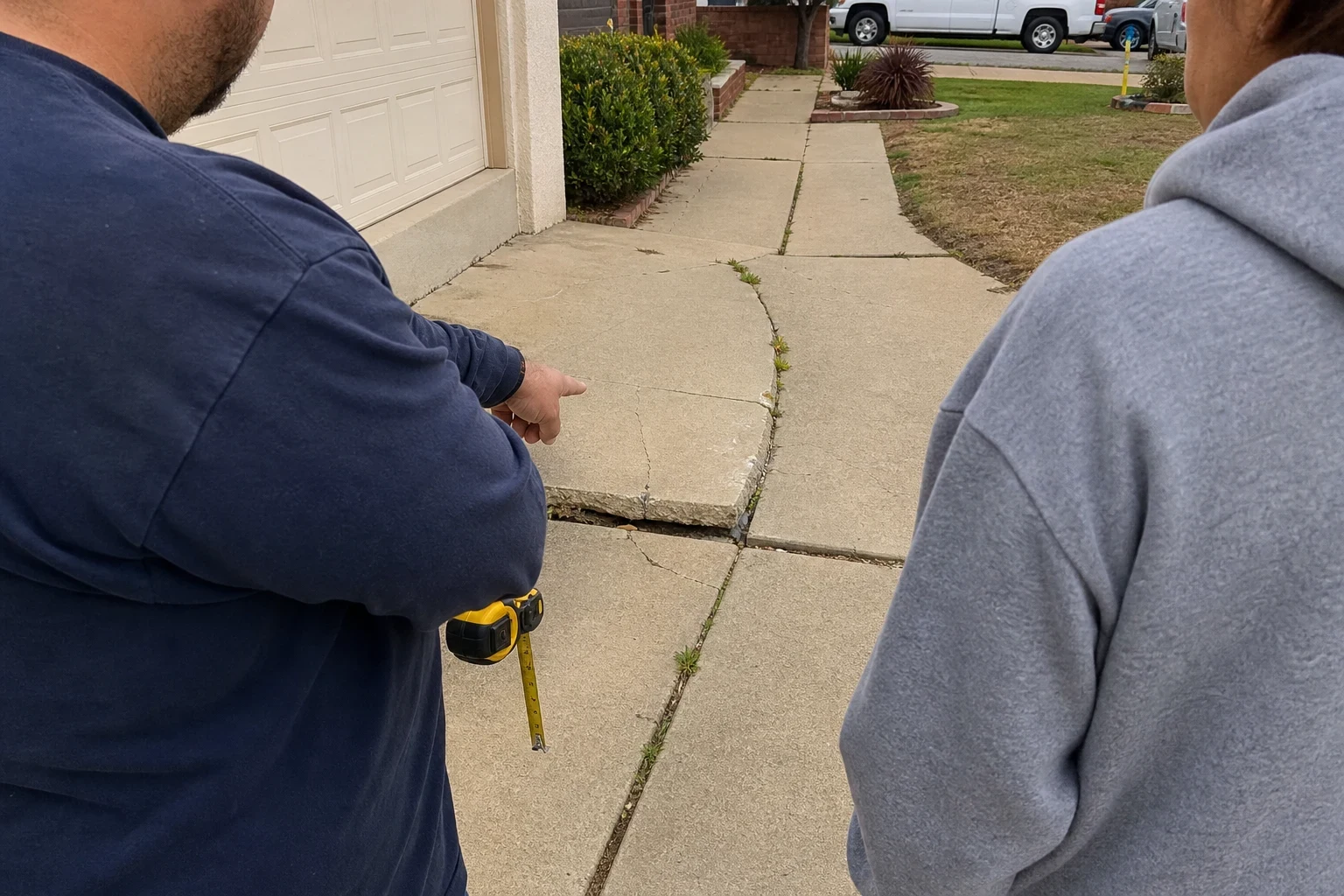
- Hairline shrinkage cracks are normal. Cracks you can fit a coin into, or where one side sits higher than the other, point to soil movement or a slab too thin for the load.
- Spalling and a dusty surface
- When the top layer flakes off or the floor leaves gray dust on everything, the surface was often overworked or poorly cured. Coatings will not bond well to it.
- A gap at the driveway apron
- A step down or open joint where the garage meets the driveway is a trip hazard and lets water under both slabs.
How the job runs
- 1
Look and measure
We look at the existing floor, check the slope with a level, and ask how you use the garage. You get a written quote that lists tear-out, base, reinforcement and finish separately.
- 2
Demo and base
Day one is usually sawcutting, breakout and haul-off, followed by grading and compacting new base. We protect the door track and walls before any heavy work starts.
- 3
Forms, steel and pour
We set forms to the planned slope, lay the vapor retarder, place the reinforcement and pour. Finishers float and trowel the surface, then joints are sawcut once the concrete can take the blade.
- 4
Cure and check back
We cover curing steps and timing before we leave. After the slab has cured, we check back to look at the floor and go over sealing, cleaning and parking guidance.
What moves the price
Garage floor pricing depends mostly on what is under the old slab and how much of it needs fixing. We price after seeing the garage, and the written quote shows each part of the work so you can see where the cost comes from.
- Floor size and thickness
- Square footage and slab depth set how many yards of concrete we order. A thicker slab for heavy trucks or a workshop costs more in material.
- Removal of the old slab
- Thick slabs or ones with heavy steel inside take longer to break out and add to haul-off weight.
- Soil and base condition
- Soft or clay soil may need more excavation and extra base rock. This is the factor we can only judge once the old floor is out, and we tell you before adding anything.
- Access and finish
- A tight driveway can mean pumping concrete instead of chuting it from the truck. Sealers or a smoother finish for coatings also add time.
Garage floor questions
- How soon can I park on the new floor?
- Foot traffic is usually fine within a day or two. We generally recommend waiting about a week before parking a car, longer for heavy trucks, because concrete keeps gaining strength for weeks. We give you dates for your specific pour before we leave.
- Will a new garage floor crack?
- Concrete shrinks as it cures, so some cracking is expected. Sawcut control joints give those cracks a planned place to form, and reinforcement keeps any crack from opening wide or offsetting. A well-compacted base is what prevents the settling cracks that made you replace the old floor.
- Should I seal or coat the floor?
- Sealing helps the surface resist oil, coolant and road grime. Epoxy and similar coatings need the slab to cure and dry first, often a month or more, so the coating bonds instead of peeling. We explain timing during our check-back visit.
- Can you tie the floor into my driveway?
- Yes. We sawcut at the threshold and set the new slab height to meet the driveway apron, so there is no lip to trip on. If the driveway itself needs replacing, we cover that on our Driveways page.
- What happens after you finish?
- We leave you curing instructions in plain terms, then check back once the slab has cured. We look at the joints and surface with you and talk through cleaning, sealing and what to avoid, like rock salt or dragging steel jack stands.
Ready for a garage floor that stays flat
Tell us how big your garage is and what the current slab is doing. We will come out, measure the floor and check its slope, then put each part of the job in writing so you can decide with the full picture.