ServicesConcrete Slabs
Concrete Slabs in Rancho Santa Margarita
We pour concrete slabs for sheds, hot tubs, equipment pads and open yard areas. Each one is built for what will sit on it, with compacted base, steel where the load calls for it, and joints placed on purpose. After the pour, we check back and walk you through curing care.
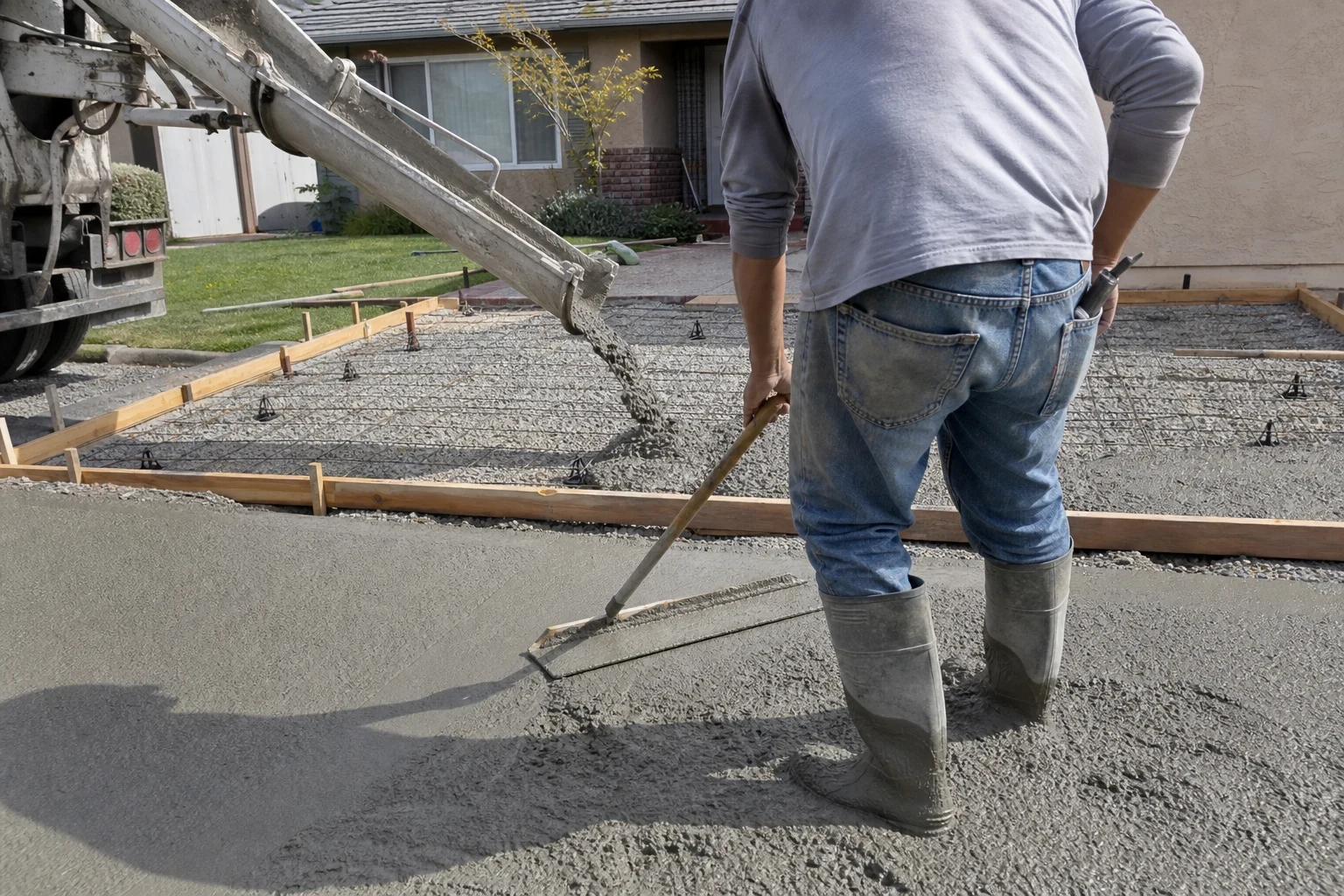
A slab built for the load it carries
A slab looks simple: a flat rectangle of concrete. What decides whether it stays flat is underneath it and inside it. The soil has to be compacted so it does not settle, the thickness has to match the weight, and the reinforcement has to keep any shrinkage cracks tight instead of letting them open and shift.
A 4-inch slab is fine for a garden shed or a trash-can area. A filled hot tub can weigh several tons concentrated on a small footprint, so we usually go thicker and add rebar on chairs so the steel sits in the middle of the pour, not on the dirt. We size each slab to its job instead of using one spec for everything.
If your project is really a patio, a driveway or a garage floor, those pages cover the finish and design side in more detail. This page is about the structural pad itself.
What goes into every slab we pour
- Excavation and subgrade prep
- We dig out topsoil and organic material, which compresses and rots over time. Then we compact the native soil with a plate compactor so the base starts firm.
- Compacted aggregate base
- A layer of crushed base rock goes down and gets compacted in lifts. It spreads the load and gives water a path away from the underside of the concrete.
- Forms and grade
- We set wood or steel forms to a string line with a slight pitch, about 1/8 inch per foot, so rain runs off instead of pooling against your shed or equipment.
- Reinforcement
- Rebar or welded wire, set on chairs so it ends up inside the slab where it can actually hold cracks closed. Heavier loads get a tighter rebar grid.
- Control joints and expansion felt
- Concrete shrinks as it cures and it will crack somewhere. We cut or tool control joints so that happens in a straight line we chose, and place expansion material where the slab meets walls or existing concrete.
- Finish and cure
- A broom finish for traction outdoors, or a smoother trowel finish for an equipment or storage pad. We apply curing compound so the surface does not dry out faster than the core.
Signs a new slab is the right call
Your shed sits on pavers or blocks
Pavers and loose blocks shift as soil moves, which racks the shed frame and makes doors stick. A slab gives the floor one solid, level plane.
A hot tub is on the way
Most manufacturers want a level, continuous surface that can carry the full weight when filled. Lawn, gravel and many older patios do not qualify.
The AC or pool equipment is sinking
Equipment on a cracked or tilted pad strains its lines and fittings. A new pad set on compacted base keeps it level.
Bare dirt you want to use
A patch that turns to mud every winter can become a clean, usable work area, a spot for bins, or a base for a future project.
An old slab that has heaved or broken up
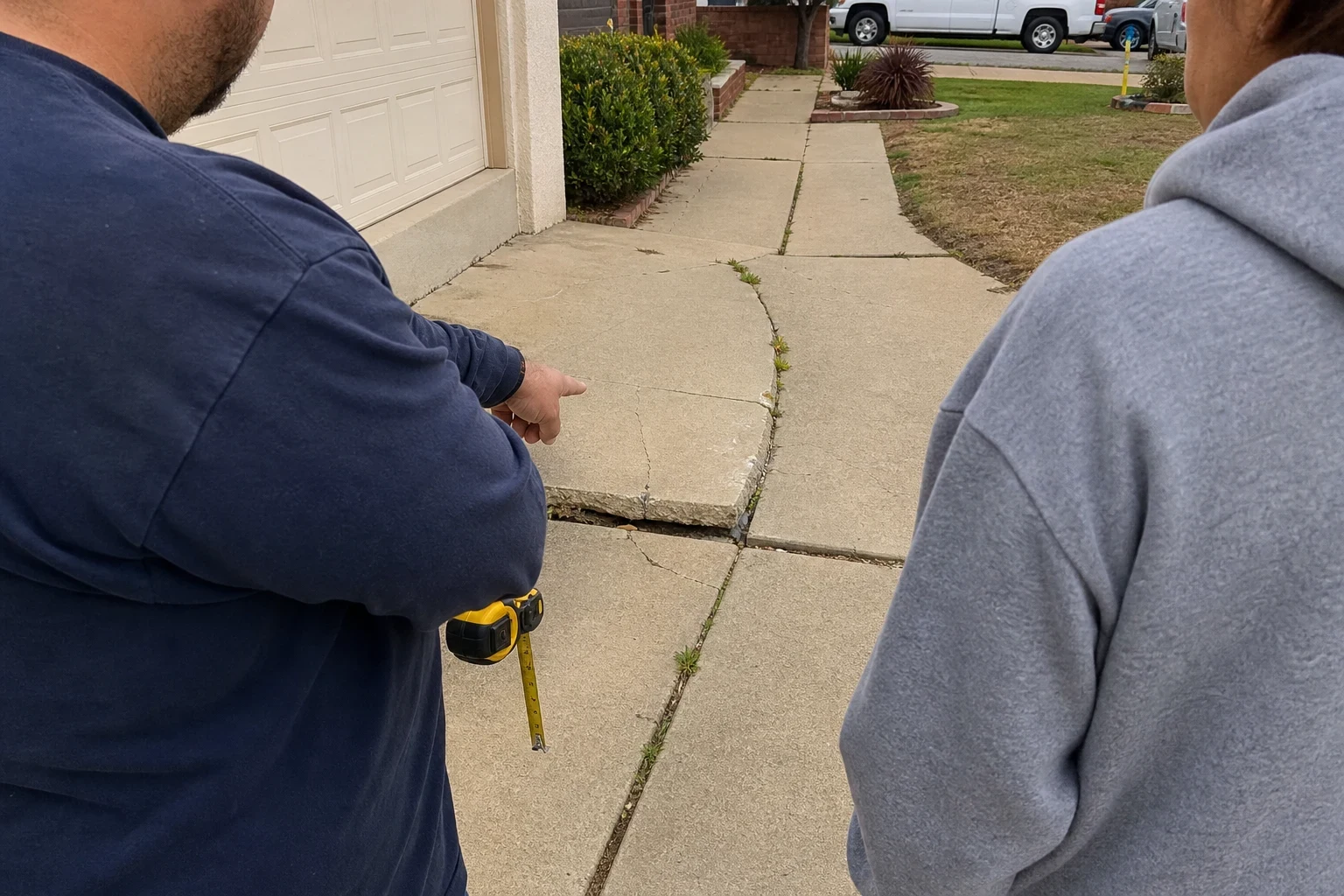
When a pad has heaved, split into pieces or dropped at one corner, the base under it has failed. We tear it out, correct the subgrade and pour new.
How a slab job runs
- 1
Site visit and sizing
We look at the spot, what will sit on the slab, drainage and access for the concrete truck or pump. We also check whether your city or HOA wants a permit or approval for the work and explain what that involves.
- 2
Prep day
Excavation, compaction, base rock, forms and steel. Many slabs can be prepped and poured on the same day, larger ones take two.
- 3
Pour and finish
The concrete is placed, screeded flat, floated and finished, then joints are tooled or saw-cut once the surface can take it. We clean up the work area before we leave.
- 4
Curing and follow-up
We tell you when you can walk on it, when light items can go on, and when it can take the full load. Then we check back after it has cured to look at the slab with you and answer questions.
What moves the price of a slab
Slab pricing comes down to how much concrete and steel the job needs and how much work it takes to get the ground ready. We give you a written estimate that breaks those pieces out, so you can see where the money goes before anything is dug.
- Size and thickness
- Square footage times depth sets the cubic yards of concrete. Going from 4 to 6 inches for a heavy load adds half again as much material.
- Soil and excavation
- Clay soils common across south Orange County swell when wet and shrink when dry, so they may need deeper base or removal of soft material. Old concrete tear-out and haul-away also adds time.
- Reinforcement
- Wire mesh, a light rebar grid or a heavy rebar grid each cost differently, and the choice follows the load.
- Access
- A slab the truck can reach directly costs less to place than one behind the house that needs a pump or wheelbarrows.
- Permits and approvals
- If your city or HOA requires a permit or review, fees and inspection scheduling become part of the job.
Concrete slab questions
Something not covered here? (949) 990-5653
How thick should my slab be?
For a shed, bins or a walk-on pad, 4 inches over compacted base is typical. Hot tubs, heavy equipment or anything with concentrated weight usually call for 5 to 6 inches with rebar. When there is a spec sheet, we check the thickness against the manufacturer's requirements.
Will the slab crack?
Some cracking comes with the material. As the mix gives up its water and hardens, the slab pulls in slightly, and that stress has to go somewhere. Control joints create a planned weak line so the crack forms inside the joint, where it is hard to see, and reinforcement holds any crack outside a joint tight and level. Good base prep is what stops the kind of cracking that shifts or sinks.
When can the shed or spa go onto the new concrete?
Walking across the slab is generally okay once a day or two has passed. A shed can usually be set after roughly a week. A hot tub should wait closer to four weeks before it is placed and filled, because by then the concrete is approaching full strength. We give you dates that match your own pour and weather.
How do I care for it while it cures?
Keep vehicles and heavy items off, and do not drag anything across the surface the first week. On hot, dry days the curing compound does most of the work, but we tell you whether light misting helps for your pour. We go over it again when we check back.
Do I need a permit for a slab?
That depends on the city, the slab's size and what it supports. Plain pads often do not need one, while slabs tied to structures or electrical equipment sometimes do. We check the rules for your address and let you know before the job is scheduled.
Ready to put a solid base under your project
Tell us what the slab needs to carry and where it goes. We will talk through thickness, steel and timing, and explain how we follow up after the pour.